






UK Opposition Leader Condemns Killing of Iranian General
The American strike that killed Iranian Gen. Qasem Soleimani marks "an extremely serious and dangerous escalation of conflict in the Middle East with global significance" outgoing British opposition leader Jeremy Corbyn claims.
Soleimani led the Islamic Revolutionary Guard Corps' Quds Force. He and an Iraqi militia leader were killed in a drone strike Thursday near Baghdad's airport.
Corbyn, who was routed in recent British elections, called on the UK government to "urge restraint on the part of both Iran and the US, and stand up to the belligerent actions and rhetoric coming from the United States."
In a letter to Prime Minister Boris Johnson, Corbyn demanded a briefing of the Privy Council, the top advisory body to Queen Elizabeth II, about the Soleimani killing. Corbyn asked whether the Trump administration consulted with the British government before the strike and what advice was given. He also asked about precautions being taken to secure British nationals in the face of possible Iranian attacks.
Johnson called for restraint following the killing, but stated "we will not lament [Soleimani's] death" because of the thousands of innocent people and Western military personnel he had killed.
Corbyn has been strongly pro-Iran for more than a decade. Between 2009 and 2012 Corbyn accepted nearly $6,600 for appearances on the state-run Press TV outlet. He appeared on the channel even after the British government banned it.
He also has had a soft spot for Iran's terrorist proxies that Soleimani supported including Hizballah, Hamas and the Popular Front for the Liberation of Palestine (PFLP). Corbyn notoriously called Hizballah his "friends" during a 2009 parliamentary meeting, and his Labour Party argued last February that no clear evidence existed to designate it as a terrorist group.
Hamas backed Corbyn's election campaign, and an individual closely tied to the group running a pro-Corbyn website from Gaza, the Jerusalem Post reported.
In 2014, Corbyn attended a wreath-laying ceremony with PFLP leader-in-exile Maher al-Taher in Tunisia.
"It seems his default position is to side with terrorists, with people like Hamas and Hezbollah, rather than side with our own agencies and military. That is historically what he has done," Labour Party House of Lords member Alan West said in November.
Labour will elect a new leader in April.
 | Share:   |
By John Rossomando | January 6, 2020 at 3:46 pm | Permalink
Hamas Sends Delegation to Islamist Summit in Malaysia
A top-level Hamas delegation is attending the Kuala Lumpur Summit, a gathering of Islamist leaders in Malaysia. Turkish President Recep Tayyip Erdogan, Iranian President Hassan Rouhani and Qatari Emir Tamim bin Hamad also are attending.
The conference gives Hamas an opportunity to argue for the Palestinian cause, said Muslem Amran, the terrorist group's representative in Malaysia.
A photo posted on Twitter shows Hamas leaders including political bureau member Mousa Abu Marzook and includes his colleagues Khalil Al-Hayya, Izzt Al-Rashiq and Husam Badran posing for a photo with Malaysian Prime Minister Mahathir Mohamad. Ironically, Mahathir complained that Muslim countries are associated with terrorism.
"For far too long we have been associated with bad governance, endemic corruption and a breeding place for terrorism," Mahathir wrote. "We can keep on shouting that such labels, especially being breeders of terrorism as callous anti-Islam propaganda. We know that it is really true but our weakness and disunity have given credence to this propaganda."
A Hamas communique notes that the terrorist group's delegation attended at Mahathir's invitation.
Relations between Hamas and Malaysia have tightened since Mahathir became prime minister in 2018. Mohamad has a history of anti-Semitic statements.
"I am glad to be labeled anti-Semitic [...] How can I be otherwise, when the Jews who so often talk of the horrors they suffered during the Holocaust show the same Nazi cruelty and hard-heartedness towards not just their enemies but even towards their allies should any try to stop the senseless killing of their Palestinian enemies," the Times of Israel reported Mahathir wrote on his blog in 2012.
Malaysia has been a focal point for Hamas operations in Southeast Asia. Hamas raised millions in Malaysia, and the country has allowed Hamas terrorists to train on its soil.
Pakistan boycotted the meeting following consultation with Saudi Arabia, which objected to what it saw as an effort by Turkey, Qatar and Malaysia to replace the Organization of Islamic Cooperation (OIC). Egypt and Saudi Arabia also boycotted the summit.
Hamas' involvement in the multi-day conference reaffirms its firm place within the Turkish-Qatari axis and serves as a reminder of Malaysia's support for the terrorist group.
| Share: |
By John Rossomando | December 20, 2019 at 11:17 am | Permalink
Libya's Muslim Brotherhood Government Requests Turkish Intervention
Libya's Muslim Brotherhood-controlled Government of National Accord (GNA) wants Turkey to send military advisers to the country. The United States and the United Nations recognize the GNA as Libya's legitimate government. The Turkish advisers would supplement Turkish forces already in Libya to fight against anti-Islamist Field Marshal Khalifa Haftar, who is backed by the United Arab Emirates (UAE), and Russian mercenaries belonging to the Wagner group. This Russian company first became prominent during the 2014 seizure of Crimea by Vladimir Putin.
Turkey has used drones in Libya against Haftar's forces over the past year.
Turkey's Islamist SADAT Defense Consulting, a group that has trained al-Qaida and ISIS-linked jihadists in Syria, in cooperation with Turkey's MIT intelligence agency, may increase its involvement in Libya. SADAT also trained and equipped Hamas fighters, according to Israeli investigators.
"SADAT has already [been] involved in Libya before in training, expertise, facilitating of arms and logistical supplies etc. The new engagement means an escalation of what they have already been doing," said Turkish journalist Abdullah Bozkurt, who has followed SADAT's activities in Libya and elsewhere. "Since the Turkish military was transformed with the purge of almost all pro-NATO officers and the posts are filled with Islamists and neo-nationalists since 2016, there is no military check on Sadat and Erdoğan government's ambitions to empower jihadists in Libya.
"SADAT would tap into huge resources of the Turkish military to fulfill Erdoğan's dream of securing an [Islamist-controlled] ... Libyan government."
Turkish President Recep Tayyip Erdogan hopes to gain a share of Libya's oil production, with Haftar now controlling the oil fields, according to the Turkish news site Boldmedya.com.
Russia has a similar interest in Libyan oil. Wagner, the mercenary group, has a history of defending Russian oil interests, Libya analyst Jalel Harchaoui of the Dutch Clingendael Institute told the Investigative Project on Terrorism. This was true in Syria. Wagner has been directly involved in combat in Libya.
"Erdoğan used SADAT and the Turkish intelligence to introduce Libyan jihadists to Syrian theater early in the conflict in 2011. Now a reverse engineering is going on with jihadists picked up from Syria and deployed in Libya with the help of the Turkish government," Bozkurt said.
Chances of Turkish and Russian mercenaries clashing in combat are remote because Erdogan needs to maintain good relations with Putin, Bozkurt and Harchaoui said.
Erdogan created trouble in the Eastern Mediterranean by threatening Greece and Cyprus over rights to explore for oil and gas in Cypriot waters, which has caused some experts to fear armed conflict between NATO members Greece and Turkey. He signed an agreement last month with the GNA to extend Turkey's maritime boundary to link up with Libya's and promised military assistance.
SADAT opposes NATO, and its founder, Brig. Gen. Adnan Tanriverdi, is Erdogan's military adviser and longtime friend. He advocates the establishment of a pan-Muslim army instead of NATO.
"It is also SADAT that decides on promotions in ranks of the Turkish military," Bozkurt said. "I would say the U.S. and Europe must be concerned a lot about SADAT's encroachment against transatlantic alliance."
| Share: |
By John Rossomando | December 19, 2019 at 4:14 pm | Permalink
Vassar President Criticizes Anti-Semitic Protests Against Israeli Speaker
An organized effort to silence a speech at Vassar College by Israeli activist Hen Mazzig last week "crossed the line into anti-Semitism" and could lead to disciplinary action, President Elizabeth H. Bradley said in a statement Monday.
Members of Vassar's Students for Justice in Palestine (SJP) chapter broke their promise to keep their protest against Mazzig's talk peaceful, she wrote When Mazzig tried to speak, he was shouted down by chants, including, "From the river to the sea, Palestine will be free."
That chant, Bradley wrote, "crossed the line into anti-Semitism" because it "can be understood to be calling for the eradication of the State of Israel and is highly intimidating to Israelis and Jews, and directed it to an Israeli speaker discussing his perspective on Indigenous Jews."
But SJP members defended their attempt to silence Mazzig, in part because he "attacked Linda Sarsour and Congresswoman Ilhan Omar, as well as other supporters of BDS, specifically targeting SJPs across the country with insults and false information."
Sarsour and Omar each have records of anti-Semitism, from Sarsour's blood libel blaming Jews for police shootings of unarmed black people in America, to Omar's series of statements invoking anti-Semitic canards about Jewish power, loyalty and money.
Protesters' chants stopped after a while and Mazzig was able to complete his talk, the Vassar SJP chapter said. "Although we do not believe that Zionism should have a platform, especially not one funded by our student government, we did not prevent anyone from attending the talk or stop [Hen] Mazzig from speaking."
But on the day of the speech, SJP said its commitment to a boycott of all things related to Israel meant it had to "refuse to offer space for even more racism and imperialism on this campus. None of us will be free until Palestine is free, and challenging Zionism wherever it emerges on campus is one of the best ways to show our solidarity."
Vassar's SJP is no stranger to controversy.
In 2016, the chapter sold t-shirts featuring convicted Palestinian terrorist Leila Khaled with the phrase "resistance is not terrorism." In 2014, the group posted a Nazi cartoon on its Tumblr page.
The Algemeiner rated Vassar College the second worst college for Jewish students to attend due to its anti-Israel and anti-Semitic activity.
President Bradley's strong statement acknowledging the inherent anti-Semitism in SJP's message is a refreshing and welcome response.
| Share: |
By Ariel Behar | November 20, 2019 at 9:10 am | Permalink
New York Times Deletes Islamic Jihad Terror Reference from Story
The New York Times edited a reference which accurately described the Palestinian Islamic Jihad (PIJ) as a terrorist group from a Nov. 12 story, the Committee for Accuracy In Middle East Reporting and Analysis (CAMERA) found. This story appeared following an Israeli attack in Gaza that killed PIJ leader Baha Abu al-Ata.
"The group is listed as a terrorist organization by many countries, and is supported by Iran," the first draft of the Times story said.
Inexplicably, that reference disappeared later in the day.
A reference to PIJ's "harder line toward Israel" appeared in its place, CAMERA wrote.
After U.S. special forces killed ISIS leader Abu Bakr al-Baghdadi in a raid last month, CAMERA noted, the newspaper had no qualms describing Abu Bakr as a "terrorist" who led a "terrorist group" that committed "acts of terror."
The United States, Canada, European Union (EU), Australia and others have designated PIJ as a Foreign Terrorist Organization.
U.S. law defines terrorism as "the unlawful use of force and violence against persons or property to intimidate or coerce a government, the civilian population, or any segment thereof, in furtherance of political or social objectives."
PIJ targets civilians just like ISIS. It has been responsible for mass casualty bombings of Israeli markets, buses and shopping malls over the years in addition to its frequent rocket attacks aimed at killing civilians.
ISIS and PIJ are guilty of similar crimes, so why the decision to suddenly obscure the fact PIJ is a terrorist organization that targets civilians?
| Share: |
By John Rossomando | November 14, 2019 at 2:40 pm | Permalink
Hamas Supports Erdogan's Brutal Attack on Syrian Civilians
Hamas, a terrorist group which diverts resources meant to improve life in Gaza to prepare future attacks on Israeli civilians, has endorsed the invasion of northeastern Syria that Turkey calls "Operation Peace Spring."
"The movement understands Turkey's right to protect its borders, defend itself and remove threats to its national security against the futility of the Zionist Mossad in the region, which seeks to undermine Arab and Islamic national security," Hamas said in a statement.
Turkish artillery rained down death on civilians in Qamishli near the Turkish border two weeks ago. Turkish planes and artillery also dropped white phosphorus incendiary munitions near the town of Ras al-Ain. Images showed children who were severely burned in the attacks.
Turkish-backed jihadists participating in Turkey's invasion also looted Kurdish and Syrian homes.
Hamas spokesman Sami Abu Zuhri reaffirmed the terrorist group's support for Turkey's offensive in an interview Monday with Turkey's Anadolu News Agency.
"We support Turkey's right to protect its security and its limitation. Turkey the government, we trust that they respect the brother of Syria's territorial integrity," he said.
But the Syrian Democratic Forces (SDF) never threatened Turkey. It tried to avoid antagonizing Erdogan, and in August it even pulled its forces away from the Syrian-Turkish border. It launched no rockets or artillery on positions inside Turkey before the unprovoked invasion.
This cautious behavior stands in contrast with Hamas, which fires rockets at civilian communities in southern Israel and invests heavily in building tunnels to use in terrorist attacks.
When Israel defends itself from Hamas attacks the group complains about how Israel kills Palestinian civilians. "Israeli occupation forces wounded 50 Palestinian civilians, including 8 paramedics and a journalist, as they brutally attacked yesterday's #GreatReturnMarch protests east of #Gaza #IsraeliCrimes," Hamas wrote in a June 29 tweet.
The violence was sparked by Hamas-orchestrated riots at the border between Israel and Gaza. Similar confrontations have taken place for more than a year. Hamas officials acknowledge that the vast majority of casualties are not civilians, but Hamas members.U.S. and Israeli authorities say that Turkey provides refuge, along with military and financial assistance to Hamas.
The U.S. Treasury Department announced sanctions last month on Hamas leaders and ISIS facilitators living in Turkey, including Zaher Jabarin, who manages tens of millions of dollars in Hamas money while living from Turkey. It also targeted the Turkey-based Redin Exchange as "a key part of the infrastructure used to transfer money" to Hamas. Redin transferred $10 million in March to the Izz ad-Din al-Qassam Brigades, Hamas' military wing.
Hamas fighters have been equipped and trained by the Turkish private military company SADAT, which also reportedly trained jihadists belonging to the Free Syrian Army who have joined the Turkish invasion and ISIS.
This support for Erdogan's assault on Syrian civilians reveals Hamas' talk about human rights is nothing but a farce.
| Share: |
By John Rossomando | October 22, 2019 at 9:20 am | Permalink
U.S. Islamist Leaders Met with Senior State Dept. Official About Kashmir
An American Islamist delegation that included a supporter of Jamaat-e-Islami Pakistan, a group that directly supports Kashmiri terrorists, met last week with a senior State Department official, the Pakistani news website Dawn.com reported.
Leaders of the U.S. Council of Muslim Organizations (USCMO) met with Deputy Assistant Secretary of State for Pakistan Affairs Ervin Massinga, a Sept. 6 tweet from the State Department's Bureau of South and Central Asian Affairs shows. The delegation included Zahid Bukhari, executive director of the Islamic Circle of North America (ICNA)'s Council for Social Justice; Nihad Awad, executive director of the Council on American Islamic Relations (CAIR); Osama Abu Irshaid, executive director of American Muslims for Palestine (AMP); and USCMO Secretary General Oussama Jammal.
India's decision last month to end the disputed region of Jammu and Kashmir's special status has heightened tensions with Pakistan. Pakistan's Inter-Services Intelligence (ISI) agency has helped foment terrorist activity in the region for decades. Pakistan and India fought a series of wars over the territory since gaining independence from Britain in 1947.
U.S. Islamists rallied behind Pakistan since India announced the change in Kashmir's status.
AMP, a rabidly anti-Israel group, tried to compare the Jammu and Kashmir issue to the Israeli-Palestinian conflict.
"Revoking Article 370 has turned India from administrator to fully-fledged colonizer, following, in many ways, Israel's methods," AMP wrote.
CAIR and its chapters also protested India's decision.
State Department officials told the USCMO delegation that the U.S. hopes to see direct talks between India and Pakistan.
Multiple posts on Bukhari's Facebook page show his support for Jamaat-e-Islami Pakistan.
Hizb ul-Mujahideen, a terrorist group that has waged a jihadist struggle against India in Kashmir since 1989, has a close relationship with Jamaat-e-Islami Pakistan. The Canadian Revenue Agency called this group the armed wing of Jamaat-e-Islami Pakistan. Hizb ul-Mujahideen was founded by a Jamaat-e-Islami member and evidence suggests a close financial relationship with the terrorist group.
Jamaat-e-Islami death squads killed thousands of civilians during Bangladesh's 1971 War of Independence from Pakistan. A Bangladeshi war crimes tribunal convicted former Islamic Circle of North America (ICNA) Secretary General Ashrafuzzaman Khan in 2013 on 11 counts of kidnapping and murder of 18 intellectuals in the War of Independence.
ICNA has historic ties to Jamaat-e-Islami, which aims to create an Islamic society. ICNA's 1994 Charter and By-Laws, which bears Bukhari's imprint, states that Islam should be "sincerely and exclusively implemented in all aspects of human life" through "democratic, legal and peaceful means."
Bukhari has offered a similar vision.
"We are to prove our claim that Islam is the only answer and the only solution for all socioeconomic, political and cultural problems," Bukhari said in the July 1992 issue of ICNA's monthly periodical The Message International.
Research Analyst Teri Blumenfeld contributed to this report.
| Share: |
By John Rossomando | September 17, 2019 at 5:53 pm | Permalink
Not the Onion: Women's March Taps Zahra Billoo in Wake of Anti-Semitism Issues
The Washington Post is out Monday with something that looks like good news. Three board members at the national Women's March who were involved in a series of anti-Semitic incidents are out. A diverse group of 16 people, including three Jews, will replace them.
But some of those new board members raise additional questions about the March, and seem to reinforce the previous concern that it is not a welcoming place for women who support the state of Israel.
For example, Zahra Billoo is one of the new March leaders. The Post quoted her talking about the challenge the March faces "being able to harness our biggest strength and turn that energy into action" before the 2020 election.
But Billoo, who runs the Council on American-Islamic Relations (CAIR) San Francisco office, matches – perhaps even surpasses – outgoing board member Linda Sarsour's hatred for Israel and those who support it. Billoo at least is candid enough to admit she doesn't think the Jewish state should exist (she has not mentioned other countries she wishes would disappear). She repeatedly has compared Israeli soldiers to ISIS terrorists. Being pro-Israel, she has written, is tantamount to being "pro-terror, pro-violence, pro-land theft, and pro-apartheid."
Criticizing Israeli leaders, or government policies, is not anti-Semitic. But rejecting even the idea of the state's existence, is. It's a view shared by the United States, Canada, the United Kingdom, France and at least 25 other nations.
Much of the Women's March troubles stemmed from the inability of outgoing leaders Sarsour, Tamika Mallory and Bob Bland to condemn the Nation of Islam's anti-Semitic leader Louis Farrakhan. As a result, the movement lost key donors and sponsors prior to January's national march.
Over the years, Billoo has touted Farrakhan and the Nation of Islam. She featured an Nation of Islam video on her blog in 2010. Seven months earlier, she felt compelled to share with her Twitter followers that she was "watching [Nation of Islam leader Louis] Farrakhan church speech, while at the gym."
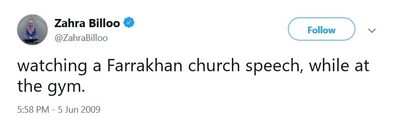
Touting Billoo's appointment to the board while Sarsour leaves would be like a company saying, "Harvey Weinstein has left our board. Here's our new member, Jeffrey Epstein."
| Share: |
By IPT News | September 16, 2019 at 2:33 pm | Permalink
New Report Highlights Hizballah's Terrorist "Media Empire"
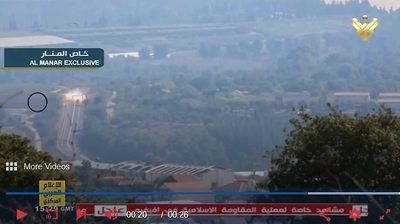 Hizballah used its al-Manar television network Monday to broadcast footage that it claims shows a missile strike targeting an Israeli military vehicle a day earlier. The attack followed a series of reported Israeli strikes targeting Iranian and Hizballah infrastructure in Syria and Lebanon.
Sharing the footage allows Hizballah to save face among its supporters and signal its resolve to far more powerful Israeli military. But beyond propaganda and deterrence efforts, Hizballah exploits its global media empire to strengthen a "resistance society" in Lebanon and cultivate to new bases of support throughout the world, according to a new Meir Amit Intelligence and Terrorism Information Center report. Hizballah's media domain is just one component of the terror group's infrastructure, along with its military wing, global terrorist apparatus, and vast network of social institutions spread across Lebanese society.
Iran funds most of Al-Manar's budget, which runs into the tens of millions of dollars. While it generates little advertising revenue, it is considered the most vital outlet in Hizballah's extensive media empire. Hizballah broadcasts propaganda around the world in four languages, primarily targeting the Lebanese population, followed by the Arab and Muslim world. But target audiences in the West are not immune. Hizballah outlets operate in English and French speaking countries and even some Latin America states. Some countries' efforts to bar the channel have been circumvented as Hizballah now relies on Russian and Indonesian satellite services to continue its broadcasts worldwide.
Coverage primarily promotes Hizballah's terrorist and militant activities, and glorifies its "shahids" (martyrs). But the channel also devotes considerable coverage to promoting Iranian propaganda and the Islamic Revolution's radical ideology. The broadcasts emphasize Hizballah's devotion to the Islamic Republic, further proving that the terror group maintains its ultimate allegiance to Iran – not Lebanese society.
The Treasury Department in 2006 added Al-Manar and Radio Nour to its list of sanctioned Hizballah affiliates. Yet the media outlets continue to operate freely, including in Ramallah with the Palestinian Authority's tacit approval. The remainder of Hizballah's media outlets and key media figures remain off the U.S. sanctions list.
Hizballah's media is instrumental in Iran's efforts to promote the Islamic Revolution's radical ideology and cultivate a terror network throughout the Middle East and the world.
"Such an extensive media empire in the possession of a terrorist organization is unprecedented among terrorist organizations operating around the world," the Meir Amit report states.
The network of media outlets is led by Hajj Muhammad Affif, who also serves as Hizballah chief Hassan Nasrallah's media adviser. Hizballah also runs several newspapers, websites, and social media accounts. It even engages in violent incitement against the United States through affiliated accounts on Twitter.
Click to here read the full Meir Amit report. It is part of a wider research project devoted to exposing Hizballah's vast social networks and institutions meant to strength the terror group's stranglehold over Lebanese society and Shi'ite populations worldwide.
| Share: |
By IPT News | September 3, 2019 at 2:07 pm | Permalink
New Report Details Hizballah's Use of Sports to Indoctrinate Youth
Hizballah established educational and athletic networks, including the "Sports Mobilization," to indoctrinate young people to embrace the terrorist organization's radical ideology, a recent Meir Amit Intelligence and Terrorism Information Center report finds.
Since its founding in 1982, Hizballah has invested significant resources in developing institutions to recruit and cultivate future terrorists. As part a broader vision to create a "Society of Resistance," Hizballah's efforts target youth from kindergarten through post-secondary schools. This includes "The Imam al-Mahdi Scouts Association," Hizballah's official youth movement, which is devoted to brainwashing young Lebanese Shi'a as loyal disciples of the Islamic Republic of Iran's revolutionary ideology. The Scouts Association has branches throughout Shi'a areas across Lebanon with tens of thousands of members nationwide.
"Hizballah perceives sports as a means of inculcating its values in the youth and attracting it to its ranks, based on the connection between sports and the jihadi-military sphere," the report said, citing Sports Mobilization chief Jihad Atiya's 2015 interview with Hizballah's Al-Manar Channel.
Photos of Islamic Republic founder Ruhollah Khomeini and current leader Ali Khamenei are often displayed during youth award ceremonies.
Iran's Islamic Revolutionary Guard Corps (IRGC) similarly spreads the regime's radical ideology by producing computer games, books, documentaries, and children's videos.
The sporting programs teach athletic skills from a young age to develop effective future terrorists and fighters. These skills include martial arts, weightlifting, swimming, and sports shooting. Hizballah emphasizes soccer, given the sport's immense popularity in Lebanese society. According to the Meir Amit report, roughly half of all athletic competitions are hosted on symbolic dates for the terrorist organization, including "Shahid (martyr's) Day."
Sports teams and facilities are named after Hizballah operatives killed during militant operations. Children are encouraged to follow in their footsteps.
This phenomenon is similar to Hamas and the Palestinian Authority's (PA) use of educational facilities and athletic activities to incite violence against Israel and encourage children to become terrorists. This year, PA-affiliated institutions, including Fatah's student movement, organized several sporting events named in honor of terrorists. Similar events were held in Hamas-run Gaza.
Hizballah's Sports Mobilization keeps a low-profile with no official online or social media presence. But throughout the course of its study, the Meir Amit Center was able to uncover 400 Hizballah-run sports events since 2011.
Lebanon's minister of Youth and Sports, Muhammad Fneish, is not featured on a U.S. sanctions list targeting Hizballah operatives despite the fact that he is a known Hizballah figure, the report points out. The government ministry also sponsors Hizballah's athletic programming.
Click here to read the full Meir Amit report. It is part of a wider research project devoted to exposing Hizballah's vast social networks and institutions meant to strength the terror group's stranglehold over Lebanese society.
| Share: |
By IPT News | July 29, 2019 at 2:58 pm | Permalink