





Essays he pulled from public view, a deleted 9/11 post, three refusals to say Israel has a right to exist, a refusal to name the IRGC to an Iranian-American whose family it hunted, and a 2011 defense of the Brotherhood he has never retracted.

In September 2026, at a town hall in Ann Arbor, an Iranian-American man named Iman Dashti stood up to ask Abdul El-Sayed a question. His cousin, he said, had been "hunted in the streets of Iran by the IRGC," the Islamic Revolutionary Guard Corps. He asked whether El-Sayed would "stand unequivocally against the IRGC."
El-Sayed answered with a lecture on American foreign policy. "For too long and too often... we have turned ourselves into the world's policemen," he said. "One can disagree with the governance of a foreign country... I will always stand for and with democratic movements, always. But I also don't believe that we were in the right to go to war to topple the government of Iran." Regime change, he said, comes where "there is a natural resource interest, and it becomes a ploy for the interests of our corporations."
"You still haven't said it, though," Dashti said. "We're dying... Do you stand with us?"
"I want freedom and democracy for the people of Iran," El-Sayed said. "No question." He never said the letters IRGC.
"You still haven't said it, though. We're dying... Do you stand with us?"
- Iranian-American questioner to El-Sayed, Ann Arbor town hall, Sept. 23, 2026
The previous five parts of this series have documented El-Sayed's two decades in the institutions the Muslim Brotherhood built in America and the company he kept there. This final part turns to his own words: what he has written and said about Israel, Hamas, Iran and the Brotherhood itself, including writing he has taken out of public view.
The Brotherhood: "This is foolish"
The most extended statement El-Sayed has ever made about the Muslim Brotherhood is a January 30, 2011 essay for HuffPost, "Why the U.S. Should Support the Protesters in Egypt," written as the uprising against Hosni Mubarak filled Tahrir Square. He urged the Obama administration to back the protesters and took on those who warned that the revolution would hand Egypt to the Brotherhood.
"Even if the Muslim Brotherhood were to take power," he wrote, "there are several reasons why the ensuing state would look nothing like Iran." He dismissed comparisons to the Brotherhood's Palestinian branch: "Others argue that Muslim Brotherhood control in Egypt would echo Hamas's leadership in Gaza. This is foolish," he wrote, arguing that the two movements arose in vastly different contexts. And, in a passage criticizing Israel's support for Mubarak, he identified the obstacle: "Perversely, support for Israel has become an obstacle to support for democracy in the Middle East."
"Others argue that Muslim Brotherhood control in Egypt would echo Hamas's leadership in Gaza. This is foolish."
- El-Sayed, HuffPost, Jan. 30, 2011
The essay is not a pledge of support, as some of El-Sayed's opponents have claimed; Bridge Michigan was right to say so. But it is a defense of the Brotherhood's fitness to govern, written by a man who had just spent his college years in the leadership of a Brotherhood-founded student organization. The Brotherhood did take power. Within two years, its president, Mohamed Morsi, had decreed his decisions immune from judicial review, and a statement bearing El-Sayed's name, published in Cairo, urged Morsi to "purge" the media and the police. His campaign declined to answer The New York Times' questions about it in. He has never retracted the 2011 essay, and asked about the 2012 statement on October 23, he would say only that it was "a ridiculous 2012 statement in a letter" that would be taken "out of context."
Israel: "Quite secondary"
On Israel, El-Sayed's words have hardened with each year of his political career.
In May 2021, during the Israel-Hamas war, he wrote a series of essays for his Substack newsletter, The Incision, several of which have not been reported before. In "Jerusalem," published May 12, he wrote that Israeli police had "attacked Al-Aqsa, penetrating the inner sanctum of the masjid itself," in attacks "calculated to disrespect, dehumanize, and provoke occupied Palestinians," and called Israeli settlement "settler-colonialism." The essay excerpted his 2020 book, Healing Politics: "Israel's government is under the control of a small cadre of extremists — and the country has perpetrated shocking violations of human rights and international law against the Palestinians, whose land it has occupied for the better part of a century." Israel took the West Bank and Gaza in 1967, 52 years before he wrote those words; the phrase leaves open whether he meant to reach back further, to Israel's founding in 1948.
In "Palestine," published May 25, he accused Prime Minister Benjamin Netanyahu of "deliberately—and quietly—executing a campaign of ethnic cleansing" and wrote that Israel "is sustaining apartheid in all but name": "freedom and democracy for Israelis, occupation and apartheid for Palestinians." He described the war that Hamas began with rockets fired at Jerusalem as "11 days of severely lopsided violence."
In fairness, the same May 2021 essays condemn violence against civilians. In "Gaza," he wrote: "To be absolutely clear: I categorically condemn violence perpetrated on innocent people, no matter who perpetrates it... Period. Hamas is wrong." In "Jerusalem": "I love my Jewish sisters and brothers and revere their beautiful faith, history, and struggle."
Five years later, as a Senate candidate, he will not say whether the Jewish state has a right to exist. Asked three times on CNN in July 2026, he spoke of "equal rights to peace, dignity, and self-determination" for Jewish Israelis and Palestinians, and answered: "Israel exists. The question is whether or not we want a politics where our money is sent over to Israel to do genocide and apartheid instead of investing in our own kids." And: "I'm not going to play this gotcha game about whether or not it has a right to exist." The question, he said, "is actually quite secondary to whether or not they have a right to our tax dollars." On Detroit's public radio station in August, he said: "I just don't believe in ethnostates and I don't think we should be backstopping them." Asked at a September debate whether the United States should continue to recognize Israel as a Jewish state, he complained that "I never get asked about the right of the state that does not exist to exist."
He says Israel "committed genocide" and "commit[s] apartheid," that Netanyahu is "obviously... a war criminal" who "ought to be prosecuted," and that the Israeli government had become "so bloodthirsty." Asked on CNN whether he would fund Israel's Iron Dome missile defense system, which intercepts rockets fired by Hamas and Hezbollah at Israeli cities, he said: "I don't believe that there's really a difference between offensive or defensive weapons. And I also don't believe it's my responsibility to buy defensive weapons for a foreign government." Was he against funding it? "I am against it in large part because I just don't understand why anybody thinks it's the right thing to do to send our tax dollars abroad to fund foreign militaries."
"I don't believe that there's really a difference between offensive or defensive weapons."
- El-Sayed on funding Iron Dome, CNN, August 2026
Hamas: "War crimes"
El-Sayed says he "condemned Hamas on day one." He told Jim Acosta in August: "I think they're wrong. I think they committed war crimes. That's not hard to say." In the next breath he added that "the Israeli government also committed war crimes, including genocide."
The record of his statements on Hamas is thinner than he suggests. The earliest condemnation of the October 7 massacre located by the IPT comes in a January 30, 2024 episode of his podcast, nearly four months after the attack: "Make no mistake, the terrorist attack that kicked this all off on October 7th is a terrible atrocity on its own terms. And as I've done and will continue to do, I condemn Hamas and its brutal violence on that day. All hostages must be free." Before launching his Senate campaign, he deleted years of posts on X; CNN reported he deleted his entire history, while his campaign told Politico it removed posts older than July 2023. On the second anniversary of the massacre, in October 2025, his campaign sent supporters a fundraising email that opened, "Two years ago this month, Netanyahu's military launched a ground invasion of Gaza," and did not mention Hamas, the 1,200 people murdered or the hostages. His spokeswoman said the email "mistakenly went out."
In the statements reviewed for this series, El-Sayed uses the word "genocide" for Israel and "war crimes" for Hamas. He does not call Hamas a terrorist organization, and he has never named the ideology behind October 7. When, at a 2019 conference, Rep. Ilhan Omar objected to being asked over and over to condemn Hamas and al-Qaeda, he told her "the point that you made, congresswoman, is entirely correct" (Part 4).
Iran, Khamenei and "Dearborn"
According to the Washington Free Beacon, El-Sayed said on a private campaign strategy call that he would not comment on the death of Iran's supreme leader, Ali Khamenei, because, in the Jerusalem Post's rendering, "there are a lot of people in Dearborn who are sad today." Asked about the report on Fox & Friends in April, he did not deny it. "Fast forward five weeks on, I think all of us are sad today," he said. "Our gas prices are up over a dollar, we're fighting a war." He said he was "no apologist for any regime, including our own."
He has called the Iran war "illegal" and "unjustified" and accused the president of "genocidal fantasies in Iran." He has taken no public position on the IRGC, which the United States designated a foreign terrorist organization in 2019.
Terror, explained
There is a consistent shape to El-Sayed's statements about terrorism, and it appears as early as his student op-ed on Jill Carroll's kidnappers in 2006 ("While their means remain unjustified, their ends I do not question"; Part 3). The act is condemned. Its cause is located in American or Israeli policy.
On September 11, 2021, the 20th anniversary of the attacks, he posted: "Today, I mourn the 3K lives, 6K injuries, & infrastructural devastation in NYC, perpetrated ignorantly in the name of my faith. Tomorrow, I'll mourn ~1M lives, millions of injuries, & infrastructural devastation in 3 countries, perpetrated ignorantly in the name of my country." The post was later deleted; it survives in web archives. In an essay that week, he wrote that the 9/11 terrorists "only exploited Islam as a pretext for an act of violence rooted in tribalistic grievance," and that the war on terror had "echo[ed] the worst of our history — the decimation of Native Americans, the Transatlantic Slave Trade, Jim Crow segregation, Japanese interment [sic]." In a 2022 video interview, he said that after 9/11 he "watched our country bomb the living hell out of people who pray like I do, who look like I do," and that "I don't know any Muslim in our community who hasn't had some experience with some sort of paid FBI informant in a local mosque."
When a man attacked Temple Israel, a synagogue in metro Detroit, in March 2026, El-Sayed condemned it: "Anti-Semitism has no place in our communities. Ever. Full stop... I condemn what he did. There is never a justification for attacking innocent people or houses of worship." Then he explained it. "Hurt people hurt people," he said. The attacker "lost family... in an airstrike in Lebanon last week." "Temple Israel is not the state of Israel. Jewish people are not the state of Israel," he said, and the narrative that would follow would be shaped "in part by the very people who launched that war that led to those airstrikes that killed those children that drove this crazed attacker to violence." In late August he apologized for parts of the response, saying he had "made a mistake."
To be fair to him, El-Sayed has also called those behind 9/11 "heinous" and their attacks "craven," and he has spoken often of the Jewish neighbors whose bar mitzvahs and Seders he attended as a child. But nowhere in his public record, in two decades, does he name the Islamist ideology that drove the 9/11 hijackers, Hamas, Hezbollah and the IRGC, or the movement, founded in Egypt in 1928, from which so much of it descends.
The questions
Over the past six parts, this series has documented what El-Sayed has not wanted to discuss: his leadership of a student organization the Brotherhood's own records call one of its own; the convention and banquet stages of ISNA, CAIR and ICNA-MAS, which the Brotherhood's own records, federal prosecutors and former Brotherhood members interviewed by the FBI place in its American network; the speakers beside him who excused terrorism and blamed "the Jewish Federation" for neo-Nazis; the activists and donors who surround his campaign; and two months of silence on the Brotherhood, followed by denials and, ten weeks in, a three-word disavowal.
He says that asking about any of this implies "dual loyalty." It does not. It asks a candidate for the U.S. Senate, who would vote on the designation of terrorist organizations and the funding of America's allies, to account for his own record. Before Michigan votes on November 3, he should answer these questions:
- No one has alleged that you swore an oath to the Muslim Brotherhood. The question is about the organizations it created. When you said "Sure. Yeah, absolutely" in Caro, what exactly did you disavow? Do you regard the Muslim Brotherhood as a terrorist movement? Do you support the U.S. designations of its Egyptian, Lebanese and Jordanian branches?
- Did you sign the 2012 Al-Ahram statement urging President Morsi to "purge" the media and the police? If so, what makes it "ridiculous," and what context has been missing? Do you still believe, as you wrote in 2011, that fears of Brotherhood rule echoing Hamas's in Gaza were "foolish"?
- The Brotherhood's 1991 memorandum lists the national MSA among "our organizations and the organizations of our friends," and a 2007 FBI assessment calls it "the first formal U.S. MB organization." Were you aware of the MSA's origins when you served on its board? Do you dispute them?
- Minutes of the U-M MSA board's Dec. 7, 2004, meeting record a proposal for a KindHearts fundraising dinner, with the assurance that the 'Organization has no legal problems.' By then, KindHearts had been publicly named in a January 2004 Senate terror-finance inquiry, and its sole professional fundraiser, Mohammad El-Mezain, had been indicted in July 2004 for funneling money to Hamas. At the Jan. 18, 2005, board meeting, which you attended, the board, still listing the dinner as a 'maybe,' discussed holding it through another group, IES, rather than the MSA. The Dec. 7 minutes also list you on the agenda. Why did the board keep planning the dinner, and did anyone check the assurance that KindHearts had 'no legal problems'?
- Federal prosecutors told a court that CAIR was added to the Brotherhood's Palestine Committee, and a federal judge found "ample evidence" of CAIR's associations with Hamas. Why did you ask audiences in 2020 to give CAIR money?
- In 2019 you told Rep. Ilhan Omar her objection to repeated demands that Muslim officials condemn Hamas was "entirely correct." Do you regard Hamas as a terrorist organization?
- Do you denounce Dawud Walid's sermon identifying "the Jews" as those who "incurred the wrath of Allah," and Hatem Bazian's claim, at a CAIR banquet you attended, that "the Jewish Federation" funds neo-Nazis?
- Huwaida Arraf wrote that Palestinians "have a right to resist with arms" and acknowledged her group "cooperates with Hamas." Will you return her contributions?
- Does Israel have a right to exist as a Jewish state? Would you vote to fund Iron Dome?
- Do you stand unequivocally against the IRGC?
Links to all six parts of the series:
Part 1. "Sure. Yeah, Absolutely." The long road to a three-word disavowal
Part 2. "Our Organizations." What the FBI and the Brotherhood's own records say
Part 3. The Ann Arbor Years. Inside the MSA chapter he helped run
Part 4. The Circuit. ISNA, CAIR and ICNA-MAS, 2017–2020
Part 5. The Company He Keeps. A rally, a flotilla organizer, a youth council and Hasan Piker
Part 6. In His Own Words. Israel, Hamas, Iran, the Brotherhood, and ten questions
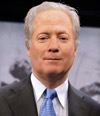 Steven Emerson is an award-winning investigative journalist, documentary filmmaker, and founder and executive director of the Investigative Project on Terrorism (IPT), which maintains one of the world's largest archives on Islamist terrorist networks. He is the author or co-author of eight books on terrorism and national security.
Copyright © 2026. Investigative Project on Terrorism. All rights reserved.
Articles by the IPT may be re-published as long as full attribution and a link back to the original article is provided. |
 Qatar: the Real Perpetrator of the October 7th Massacre
 UAE-Israel Peace Deal Challenges Iranian, MB Camps
 The Tug of War for Tunisia