





For two months, Michigan's Democratic Senate nominee said nothing about the Muslim Brotherhood. Then came denials, dismissals and, ten weeks in, three words, followed by attacks on the people who asked. An IPT investigation of his record shows why the question will not go away.
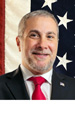
The question came from the back of a town hall room in Caro, a farm town in Michigan's Thumb, on the evening of October 17. A man who gave his name only as "Tommy," later identified in press reports as Thomas Teepell, a former aide to Republican Sen. Josh Hawley, called out to Abdul El-Sayed, the Democratic nominee for the U.S. Senate: "Will you disavow the Muslim Brotherhood?"
"Sure. Yeah, absolutely," El-Sayed said. Then, before the words had settled, he turned on the questioner. "But I want to ask the question that you're asking. Why are you asking the question?"
What followed, captured on a five-minute video that El-Sayed posted to his own social media accounts that night, was not a statement about the Muslim Brotherhood. It was a cross-examination of the man who had asked about it. "Do you assume that I wouldn't?" El-Sayed asked. "Yes," Tommy said. "You're asking the question because implicitly you assume that I'll have dual loyalties," El-Sayed told him. "Or that I'll have some higher order allegiance than the Constitution." He demanded to know whether Tommy had ever disavowed the Brotherhood himself, quizzed him on John F. Kennedy and the Constitution, asked what faith he practiced and whether he lived by Christian doctrine, and closed: "I think it's you who needs to understand the Constitution, not me."
El-Sayed's caption on the video said nothing about the Brotherhood either. "This is Tommy," it read. "Tommy had a question about my allegiances. Listen to the end to hear about his."
In the nine days since, those three words, "Sure. Yeah, absolutely," have remained the core of El-Sayed's answer. Asked the next day whether he had done enough, he said he had "clearly condemned" the Brotherhood and that it was "not a difficult thing to do," then pivoted at once to what he called the Republicans' attempt to imply "a certain implicit dual loyalty." When a Newsmax reporter asked him on October 20 whether he had done enough to satisfy critics, he told the reporter to go watch the clip "a lot more times." "If it's not clear enough, I clearly disavow it," he said. "Are we good?"
He has not said what, precisely, he is disavowing.
"I'm going to ask you to watch that clip a lot more times. I clearly disavowed it... If it's not clear enough, I clearly disavow it. Are we good?"
- El-Sayed to Newsmax, Oct. 20, 2026
A question first asked in August
In his campaign, El Sayed has routinely responded to questions about his views on the Muslim Brotherhood by falsely claiming he is being accused of dual loyalty. He claims that his opponent Mike Rogers accuses him of dual loyalty in his comments about El-Sayed and his very real connections to the MB in the US. In fact, the IPT found no instance of Rogers using the phrase "dual loyalty," or attacking El-Sayed's religion as such. The phrase first appears in the Brett Baier interview, and El-Sayed is the one who says it. Baier's question had been about "this Muslim Brotherhood thing." Rogers repeatedly says the opposite about religion: "This is about the way you think, not the way you pray."
For two months, El-Sayed said nothing about the Brotherhood. An IPT review of every video transcript and caption on the six accounts he uses, including his Substack, since April 2025 found no statement about the Brotherhood before October 5. In mid-August, after the attacks began, he posted a video that did not name the group or say what it was answering: "So they're going to use Islamophobia because their ideas are tired."
Accusing his questioners of being Islamophobic in asking questions about El-Sayed's view on the Muslim Brotherhood is taken straight out of the Islamist handbook in western societies. Invoking it to intimidate or stifle questions about his views on an issue that has profound implications for U.S. security is ironically more of an admission of El-Sayed's support of the MB than he realized. When the Washington Free Beacon asked his campaign in late September about the Morsi statement and his current view of the Brotherhood, the campaign did not respond.
On October 5, Fox News anchor Martha MacCallum put the question to him directly. In January 2026 the United States had designated the Brotherhood's Egyptian, Lebanese and Jordanian branches as terrorist organizations; the government cited, among other things, the Egyptian branch's support in justifying terrorism carried out by Hamas. Would El-Sayed support those designations? He would not endorse them. He said he would back the designation of any organization engaged in political violence. But that didn't include the Brotherhood when pressed. He shot back, "show me they are engaged in political violence."
Three days later, at the first debate in Grand Rapids, Rogers raised the Brotherhood at least five times, saying El-Sayed had taken money from groups "associated" with it. El-Sayed did not rebut the Brotherhood charges on stage; at one point he dared Rogers to "go ahead and say it." Asked by reporters afterward why not, he said he would not dignify the claims, which he called "hearsay accusations that are just not worth the dignity of a response."
"I don't dignify those kinds of claims... hearsay accusations that are just not worth the dignity of a response."
- El-Sayed after the Oct. 8 debate, as reported by The Blaze
"No"
On October 11, NBC's Kristen Welker asked him on Meet the Press to "set the record straight about whether you or your family have any ties to the Muslim Brotherhood." He began by saying Rogers raised the subject only because "he really wanted to repeat the word Muslim." Once again, El-Sayed fell back to his Islamist tool kit to twist the question asked of him as a means of falsely accusing his opponent of vilifying Muslims. But the NBC anchor didn't let him get away with it. She continued to press El-Sayed about any ties he or his family had to the Brotherhood. Welker asked again about such ties. "No," he responded. In fact, that was a brazen lie as this series will demonstrate.
That night, the Free Beacon published social media posts by El-Sayed's maternal half-sister, the University of Chicago sociologist Eman Abdelhadi. "My family has long been MB," she wrote on June 24, 2012, using a common abbreviation for the Brotherhood, "but I've always felt that it has navigated the political sphere poorly/destructively." Another 2012 post read: "Had an amazing talk with my mom about her activism in the Muslim Brotherhood during the early 70s while she was in college." In 2013 she wrote: "Praying for all my family that supports the #MB in #Egypt. Lie low, stay safe."
These are the half-sister's claims, not established facts, and they describe relatives, not El-Sayed. But they collide with the categorical denial he had just given on national television. When NBC's Tom Llamas read the posts to him on October 14, El-Sayed's answer shifted from denial to disclaimed knowledge. "I have no ties. We have no ties," he said. Then: "I have never had these conversations with my mother. I wasn't raised by my mother." (His parents divorced when he was three, and he was raised by his father and stepmother.) He accused Llamas of "using hearsay evidence from a tweet" and asked whether the anchor was "insinuating that somehow I was lying."
Then, at last, came Caro.
The disavowal, examined
The Caro exchange deserves a fair reading. Asked whether he would disavow the Brotherhood, El-Sayed offered a dismissive "Sure. Yeah, absolutely," then turned the question on the questioner: "But I want to ask the question that you're asking. Why are you asking the question?" The questioner, Tommy, was unconvinced: "I have not heard you disavow them yet." El-Sayed spent the next four minutes on Tommy's motives, telling him, "you assume, Tommy, that because I am Muslim, that somehow I would have some allegiance to something that is not our Constitution." He ended by demanding a disavowal from Tommy instead, and closed with "I think it's you who needs to understand the Constitution, not me." He said nothing about the Brotherhood itself, its ideology, or the organizations he worked with. A disavowal that names nothing and condemns nothing is a disavowal in name only.
On October 23, Fox News anchor Bret Baier tried to ask him about the 2012 statement. El-Sayed cut him off. "I have never been a member of the Muslim Brotherhood. I never will be," he said, adding that his loyalty "will be to the Constitution of the United States." When Baier said the Rogers campaign was citing "a 2012 statement," El-Sayed said: "I'm not interested in what you're going to pull out... a ridiculous 2012 statement in a letter, you're going to pull that out of context. You're going to ask questions about my allegiance."
"A ridiculous 2012 statement in a letter, you're going to pull that out of context."
- El-Sayed to Bret Baier, Fox News, Oct. 23, 2026
His central line to Baier, "I have never been a member of the Muslim Brotherhood," answers a charge the documented record does not make. In America, the Brotherhood's sworn membership was small and secret by design; its founders publicly called themselves "the Cultural Society," and an internal Muslim American Society memo, according to a 2008 Hudson Institute study, instructed leaders to deny being part of the Brotherhood if asked. The movement did its public work through the open organizations it created, beginning with the Muslim Students' Association, which its own officials described as the vehicle for its da'wah, or call to Islam, in America. The question is not whether El-Sayed took an oath. It is why he spent two decades in the institutions the Brotherhood built, and why he will not say a critical word about the movement that built them.
The IPT found no earlier public reference by El-Sayed to the 2012 statement. He has not said what context would change its meaning, and his campaign his campaign declined to answer The New York Times' questions about it. The statement, published on the Egyptian state-owned Al-Ahram Gate website in late November 2012, carried 46 signatures, individuals and several organizations, styled "Morsi supporters in America." It endorsed Morsi's November 2012 constitutional decree, by which the Brotherhood's president placed his decisions beyond judicial review, while asking him to declare that the decree would end once a constitution was written, and it demanded a "purging of the media and the police as soon as possible." In an IPT translation, it pledged: "We will stand shoulder to shoulder in support of the elected president." It was signed by some of the most senior MB affiliated individuals at that time.
The statement was not an isolated moment. In a January 2011 HuffPost essay, written as crowds filled Tahrir Square, El-Sayed urged Washington to back the protesters and brushed aside fears that the uprising would hand Egypt to the Brotherhood. Even a Brotherhood government, he argued, "would look nothing like Iran." Bridge Michigan and PolitiFact read the essay as an argument for democracy, not for the Brotherhood; it is examined in Part 6. Ten years later, in October 2021, he used his Substack newsletter, The Incision, to champion his "friend" Mohamed Soltan, an American who had been imprisoned in Egypt on charges that included Brotherhood membership and whose father, Salah Soltan, is described by Newsweek and others as a senior Brotherhood figure. El-Sayed later made the newsletter private. The IPT found no statement by El-Sayed, before or during this campaign, criticizing the Brotherhood's ideology, its record in power in Egypt, or its relationship with Hamas.
"Because Americans are idiots"
The candidate has been careful with his words. One of his campaign workers was not.
On October 26, The Midwesterner published video of TJ Wolfgram, whom the outlet identified as the El-Sayed campaign's captain of conservative and independent outreach, discussing the controversy with an off-camera interviewer. The concern about El-Sayed and the Brotherhood exists, Wolfgram said, "because Americans are idiots." He went further: "I don't have any issue with the Muslim Brotherhood," he said, and if he knew more about the group, he "might support some of what they do." As of this writing the campaign had not commented on the video.
Wolfgram is not the candidate, and El-Sayed is not responsible for every word spoken by those who work for him. But the remarks of a worker assigned to court conservative and independent voters suggest that, for at least some of those around El-Sayed, the Brotherhood is not a problem to be disavowed but a smear to be defeated.
Why the question will not go away
El-Sayed wants voters to believe the Brotherhood question comes from nowhere but bigotry: that it is asked only because of his name and his faith, to imply that he has "dual loyalties." "There's nothing about my history or record to imply that," he told Newsmax.
This series does not question his loyalty to the United States. It examines his history and his record, which are a different matter.
Over the past several months, the Investigative Project on Terrorism has assembled thousands of pages of primary documents and hundreds of hours of audio and video recordings: the internal newsletters and executive-board minutes of the Muslim Students' Association chapter El-Sayed helped lead at the University of Michigan; declassified FBI reports and interview records obtained under the Freedom of Information Act; Muslim Brotherhood documents seized by the FBI and entered into evidence in the Holy Land Foundation terror-financing trial; conference programs and recordings of the convention stages El-Sayed has occupied since 2017; and his own writings, including essays he has since taken out of public view.
The record they describe is not a smear. It is a two-decade pattern. It begins with El-Sayed's years in the leadership of a chapter of the national Muslim Students' Association, which the Brotherhood's own records list among "our organizations and the organizations of our friends," and which a 2007 FBI intelligence assessment called "the first formal U.S. MB organization." It runs through his repeated appearances, as a candidate and as a featured speaker, before the Islamic Society of North America, the Council on American-Islamic Relations, and the joint conventions of the Islamic Circle of North America and the Muslim American Society, all of which appear in the Brotherhood's own records, in federal prosecutors' filings, or in FBI interview reports as part of the Brotherhood's American network. It includes the stages he shared with speakers who rationalized terrorism, defended convicted terror financiers, and trafficked in antisemitic conspiracy theories, and the silence with which he met them.
Abdul El-Sayed says he has never been a member of the Muslim Brotherhood, and no one has claimed he took an oath. The Brotherhood in America never worked through membership cards. It worked through the institutions it created, beginning with the Muslim Students' Association. These records show that El-Sayed has spent two decades inside those institutions, and that he still will not say a critical word about the movement that built them. Michigan voters deserve to know about his ties to and work with the MB.
Next: Part 2. "Our Organizations." A 2007 FBI intelligence assessment calls the MSA "the first formal U.S. MB organization," and a former Brotherhood member told the FBI that the MSA, ISNA and the Muslim American Society were "officially" the U.S. Brotherhood. What the government's files and the Brotherhood's own documents say about the groups El-Sayed has served, and why his "membership" denial misses the point.
Links to all six parts of the series:
Part 1. "Sure. Yeah, Absolutely." The long road to a three-word disavowal
Part 2. "Our Organizations." What the FBI and the Brotherhood's own records say
Part 3. The Ann Arbor Years. Inside the MSA chapter he helped run
Part 4. The Circuit. ISNA, CAIR and ICNA-MAS, 2017–2020
Part 5. The Company He Keeps. A rally, a flotilla organizer, a youth council and Hasan Piker
Part 6. In His Own Words. Israel, Hamas, Iran, the Brotherhood, and ten questions
 Steven Emerson is an award-winning investigative journalist, documentary filmmaker, and founder and executive director of the Investigative Project on Terrorism (IPT), which maintains one of the world's largest archives on Islamist terrorist networks. He is the author or co-author of eight books on terrorism and national security.
Copyright © 2026. Investigative Project on Terrorism. All rights reserved.
Articles by the IPT may be re-published as long as full attribution and a link back to the original article is provided. |