





On a July afternoon in 1995, in a federal courtroom in lower Manhattan, a 26-year-old medical student took the stand for the defense in the largest terrorism trial in American history. He greeted the defendant, Sheikh Omar Abdel-Rahman — the Egyptian cleric whose followers had bombed the World Trade Center two years earlier — with the traditional "Asalam Alaykum," then sat down to face prosecutor Patrick Fitzgerald.
The witness was Adam Hamawy. Today he is the front-runner in Tuesday's Democratic primary for New Jersey's 12th Congressional District.
The Washington Free Beacon recently confirmed Hamawy's appearance as a defense witness and reported that he met Abdel-Rahman in 1991, traveled with him, translated for him, and shared a hotel room with him in Detroit at a conference Abdel-Rahman headlined. This story takes it further. He did not just appear as a defense witness. He gave testimony, under oath, that the now-recovered transcript of the conference itself shows was deliberately untruthful.
The Jihad Conference Hamawy Attended
The November 29, 1991 First Annual Conference of the Islamic Charity Project International, held at the Westin Hotel in Detroit, was titled "Towards a Global Islamic Economy." The speakers were not economists; there were no speeches about economics. The featured speakers were leaders of jihadist and Islamic terrorist groups: Omar Abdel-Rahman, head of Egypt's Gamat Islamiya; Ahmed Nofal, a leader of Hamas; and Hassan al-Turabi, leader of Sudan's National Islamic Front.
Sheikh Omar's address — entered into evidence at trial as Government Exhibit GX-388 — was titled "The Best Way on Supporting Jihad." Its opening sentence:
Allah has obligated upon us Jihad in the cause of Allah. It is one of the obligations that must be fulfilled, and it is the pinnacle of Islam.
Eleven minutes in, the cleric named the next target. Without using his name, he placed Hosni Mubarak — the sitting Egyptian president — third in the line from Nasser and Sadat:
Sadat surrendered what Israel wanted in the Camp David treaty. And the third treacherous traitor comes to be the loyal dog of America. And gives everything. And leads the caravan of treason to give everything to Israel and behind it America.
The U.S. government would later argue, successfully, that this was a solicitation to murder. This is the speech Adam Hamawy attended. This is the speech he was asked, four years later, to characterize under oath.
What Hamawy Told the Jury
On direct examination by defense attorney Lynne Stewart, Hamawy was asked the subject of the conference. His answer: "It was Islamic economy. Economic — it was an economy conference."
In fact, the title was a ruse. The leading terrorists in the world had gathered in Detroit to advocate jihad. Sheikh Omar's listed title was "The Best Way of Supporting Jihad," and his opening sentence declared jihad "the pinnacle of Islam." Hamawy called it an economy conference.
Then Fitzgerald began cross-examination.
Fitzgerald: Do you recall hearing defendant Abdel Rahman talk about Mubarak at any time that weekend?
Hamawy: No. Not really.
Fitzgerald: Do you ever recall defendant Abdel Rahman talking about Mubarak as the loyal dog of America in the Middle East?
Hamawy: He referred to him that way several times, yes.
Fitzgerald: Was it that weekend that he did it?
Hamawy: I don't recall that weekend.
Fitzgerald then handed Hamawy Government Exhibit 388T, the trial's official transcript. Page 5.
Fitzgerald: With regard to the particular portion of page 5 that I have pointed out with my finger — does that refresh your recollection as to whether defendant Abdel Rahman made a speech that weekend concerning the person who is the backstabber who became the loyal dog to America?
Hamawy: Yes.
Forty seconds earlier, he had answered "no, not really." The only thing that had changed was the document.
Fitzgerald moved on.
Fitzgerald: He spoke about jihad, not economics, is that correct?
Hamawy: In a way it is not really correct. But he did speak about jihad — but it was in reference, basically — it wasn't jihad in specific.
The speech opens on waging jihad as an obligation, returns to it mid-speech as the only cure, and closes with a Quranic verse threatening divine punishment on Muslims who decline jihad. Hamawy described that as "not jihad in specific."
Fitzgerald: Did defendant Abdel Rahman talk during that speech about conquering the land of the infidels?
Hamawy: I don't recall specifically, but he might have, yes.
Fitzgerald handed him page 2. Line 5.
Fitzgerald: Does that refresh your recollection whether he talked about jihad for the sake of God and conquering the land of the infidels?
Hamawy: Yes, but you're kind of taking it out of context.
Fitzgerald had not taken anything out of context — the line is in the speech's third paragraph and frames everything that follows. Then he asked the most basic possible question.
Fitzgerald: Was this a trade war, or was it jihad?
Hamawy: It was a struggle in the sake of God, yes. It was a jihad.
The witness called to portray the conference as an economy conference had now told the jury, in his own words, that its main address was a jihad speech.
Fitzgerald turned to the second speaker. Dr. Ahmad Nofal had spoken for an hour after Sheikh Omar, on the same stage, to the same audience.
Fitzgerald: Have you ever heard Dr. Nofal to be affiliated with the Hamas movement?
Hamawy: No.
Fitzgerald: Never?
Hamawy: Never.
Nofal was known worldwide as a Hamas leader. His Detroit speech, which Hamawy admitted to personally observing, defended Hamas as the wronged party in its clash with the PLO and called Jews "Shylocks" and "the sons of Satan." Hamawy also testified that he had attended additional Nofal speeches afterward. This is the man he testified, twice, that he had never heard affiliated with Hamas.
The Witness Who Couldn't Help Himself
Hamawy's testimony moved through a recognizable pattern on every contested point: misrepresentation, denial, or non-recollection — and concession only after the document was produced.
Witnesses with memory failures forget evenly. Hamawy remembered, in granular detail, who was driving the van to Detroit, what kind of vehicle it was, whose homes they stopped at, what each passenger wore, where each one sat. What he could not recall was the substantive content of a forty-minute religious speech he had heard at the destination.
The asymmetry of the forgetfulness — all of it running in the defendant's favor — is the giveaway. So is what Hamawy admitted later, when Fitzgerald asked whether Sheikh Omar gave speeches on tolerance toward Jews and Christians:
I had heard him speak about that but not in speeches in public forums. I had heard him in small classroom type settings, because usually when he spoke in public he spoke about jihad, that's what he spoke about.
Hamawy was acknowledging that Sheikh Omar's pattern of public speaking was jihad. The Detroit conference was a public speech. His direct-examination characterization of it as primarily about Islamic economy cannot be reconciled with that admission. One of the two characterizations is dishonest.
The Verdict the Jury Reached
Abdel-Rahman was convicted on every count, including seditious conspiracy, soliciting the murder of Mubarak — the count Hamawy had been called to rebut — and conspiring to bomb six New York landmarks. He died in federal prison in 2017.
Fitzgerald's methodical cross-examination, document in hand, exposed the witness. On the stand, Adam Hamawy was deliberately deceptive on multiple specific points, and the deception ran consistently in the defendant's favor.
The Candidate Who Won't Discuss It
Thirty-one years later, Hamawy is asking voters to send him to the U.S. House. Members of Congress see classified intelligence and vote on counterterrorism funding.
The Free Beacon, which broke the story, sent the campaign detailed questions about the testimony. Daniel Greenfield at Front Page Magazine did the same. Neither received a reply. Hamawy's Wikipedia entry and campaign biography are silent on the trial.
He has good answers available to him. He could acknowledge that calling a speech about "the pinnacle of Islam being jihad" an "economy conference" was wrong, that denying any recollection of the Mubarak passage was wrong, that describing Ahmad Nofal as never affiliated with Hamas was wrong — and explain why a 26-year-old defense witness might have given those answers under pressure.
He has said none of this. He has said nothing at all.
Voters in NJ-12 are entitled to ask one question, and to weigh his answer — or his silence — when they cast their ballots: knowing now what the speech transcript says, does Hamawy stand by the testimony he gave in 1995? If yes, he should defend it. If no, he should say so. Anything less is an abdication of the most basic obligation a candidate for federal office owes the people he proposes to represent.
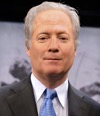 Steven Emerson is executive director of the Investigative Project on Terrorism, which tracks radical Islamist networks in the West. He is the author of eight books and producer of multiple award-winning documentaries, including "Jihad in America: The Grand Deception" which is the only comprehensive exposé of the Muslim Brotherhood's covert infrastructure in the United States.
Copyright © 2026. Investigative Project on Terrorism. All rights reserved.
Articles by the IPT may be re-published as long as full attribution and a link back to the original article is provided. |