





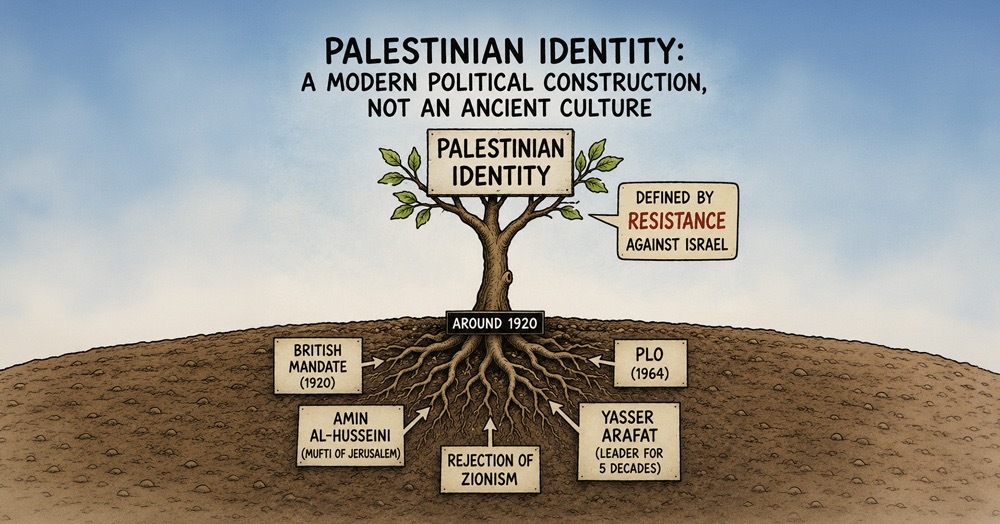
Among the distinguishing features of culture are art, architecture, literature, film, education, music, entertainment, and language. In each of these categories, Palestinianism depends entirely on the dream of destroying Israel. No other Arab sub-culture is so monomaniacal.
The PLO's Creation
Under Yasser Arafat's leadership, the PLO actively produced Palestinian culture through the Unified Information Office's Plastic Arts Section and its Department of Arts and National Culture which, according to Kristine Khouri and Rasha Salti at The Markaz Review, "were mandated to commission, fund, and promote the production of posters, art, film, theater, dance, music, and publications; to preserve folklore and cultural traditions; and to galvanize support for the Palestinian struggle internationally, in the arena of art and culture."
In 1978, the Plastic Arts Section organized the "International Art Exhibit for Palestine" in Beirut, confidently announcing that, "Beside armed resistance in extremely difficult conditions, our people is carrying out a political and cultural struggle."
It continues, "This exhibition will be a starting point for a militant cultural front that enables us, through art expression, to convey our cause and voice to all peoples and enable these peoples to participate in our struggle."
Palestinian Art and Architecture
Art and architecture have always been considered important indicators of cultural achievement, and there is a well-documented body of Palestinian art in the Twentieth Century.
By claiming that Palestinian art begins in the Byzantine era, partisan historians show that their agenda takes precedence over logic. Referring to the Al-Aqsa mosque as an example of Palestinian architecture misrepresents the work of the Byzantine period, which was entirely alien to anything having to do with "Palestine" or the people who today call themselves "Palestinians."
There was never was a distinctively "Palestinian" art unconnected to violence and war.
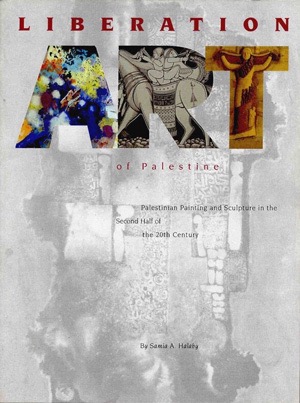
by Samia Halaby
As Palestinian artist and art critic Samia Halaby pointed out in 2012, Palestinian art is liberation art. Aesthetics are subsumed by agenda, and the agenda is to fight against Israel.
In a long passage worth quoting in its entirety, Halaby demonstrates the single mindedness of Palestinian art: "The horse came to mean revolution. The flute came to mean the tune of the ongoing resistance. The wedding came to mean the entire Palestinian cause. The key came to mean the right of return. The sun came to mean freedom. The gun with a dove came to mean that peace would come after the struggle for liberation. Artists used the colors of the flag, patterns from embroidery, chains, etc. Village scenes, village dress, the prisoner, prison bars. There were special themes regarding the martyr. First there were generalized pictures of the martyr as well as pictures of specific individuals who had been killed by the Israelis. The second form was based on a popular practice of framing a collage of symbols representing the deceased's life then hanging it at their home or grave."
As for architecture, the greatest Palestinian achievements are underground. Surely the most impressive Palestinian engineering has never been seen by most of the world since it is hidden beneath the Earth. Like everything else in Palestinian culture, Subterranean Gaza was built to wage war against Israel, allowing Hamas fighters to penetrate Israel's borders and fabricate weapons shielded from watchful eyes overhead.
Palestinian Literature
Another important marker of culture is literature.
There is a long history of Arab narrative and lyric poetry on many topics. Sincere and satirical stories about love, nature, and heroism pre-date Islam. But Palestinian poetry is exclusively about "resistance." It consists of angry, self-pitying victim narratives and revenge fantasies.
The New York Times says, "For a Raw Portrait of War, Look to Palestinian Poets." A writer for the Culture section at The Atlantic advises that "Everyone Should be Reading Palestinian Poetry," enthusing that "although reading about violence in Palestine does little more than cause me pain and frustration, poetry allows me to access the place's wonder and complexity." The problem is that most Palestinian poetry is about violence. Even the annual Palestine Writes Literature Festival is obsessed with violence.
The most famous Palestinian poet was Mahmoud Darwish, who was also a member of the PLO. His most famous poem, "Identity Card," is about killing Israelis. The poem concludes with these six lines:
But if I become hungry
The usurper's flesh will be my food
Beware ...
Beware ...
Of my hunger
And my anger!
Fittingly, Darwish is buried in Ramallah, across from the Palace of Culture. His gravesite was later expanded into the Mahoud Darwish Memorial Cultural Center and Park.
Palestinian Film
Palestinian film is also dominated by violence. Beginning with the PLO's Information Department's propaganda films, like With Soul and Blood (1971) and We Are the Palestinian People (1973), to this day, Palestinian cinema is dominated by violence.
Palestinian film series have titles like "Palestinian Revolution Cinema" and "Cinema of Palestinian Return." As the blurb to Hamid Dabashi's book, Dreams of a Nation: On Palestinian Cinema (2006), has it, "Deeply rooted in the historic struggles for national self-determination, this cinema is the single most important artistic expression of a much-maligned people."
Palestinian Education
Children's entertainment is even worse. Generations of children have been brain-washed by the education-entertainment combination produced by the PLO, the PA, and Hamas. Pierre Rehov's eye-opening documentaries and Palestinian Media Watch analyses illustrate what Palestinian culture has brought to child rearing and education.
Hamas has weaponized the simple, innocent fun of flying a kite, turning it into Kite Jihad. The PLO turned Disney's beloved Mickey Mouse into the murderous rat Farfour. Even summer camps for children have been transformed into jihad training grounds. If the entire Palestinian educational system were changed immediately, it would likely take another eight decades to erase all the hatred inculcated over the previous eight.
Palestinian Music
Music is no different. Traditional Arab music types (the ataaba, mawwal, taktouka) are popular among Palestinians, Syrians, and Jordanians alike, but what distinguishes Palestinian music from Arab music is, again, the concept of "resistance."
Most sources differentiate between "Palestinian" music prior to, and after, 1948. The Interactive Encyclopedia of the Palestinian Question takes it a step further: "Palestinian musical output changed significantly after 1967, when ... A new kind of music emerged in opposition to the new occupation, and what became known as 'committed songs' gained prominence alongside the national anthems that had been popular before."
The first Intifada marked another turning point, leading to the establishment of the National Conservatory of Music in 1993 at Birzeit University, eventually renamed the Edward Said National Conservatory of Music, celebrating the leading anti-Zionist intellectual. The latest iteration of Palestinian music is protest rap music. The popular music streaming service Spotify has a "Palestine Solidarity Protest Playlist." Since February 17, 2024, the number one song has been "From the River to the Sea, Palestine Will Be Free."
Palestinian Language
Like the rest of the Arab world, the language of Palestinian culture is Arabic, but Palestinian culture has actually added to the language, introducing a word that hadn't existed in the entire 2,000-year (give or take) history of the language. It came on January 27, 2002, as Yasser Arafat spoke to a crowd of over one thousand women outside of his Ramallah compound. It was his famous "feminism" speech where he told the women that they would become his "Army of Roses that will crush Israeli tanks."
What Arafat did next changed the language. He shouted "Shaheeda all the way to Jerusalem," and the crowd chanted back knowingly "Shaheeda, Shaheeda, Shaheeda." What made it unique is that the Arabic word for martyr (shaheed) had previously existed exclusively as a masculine noun with no feminine counterpart. Arafat "coin[ed] on the spot the feminized version of the Arab word," as Barbara Victor puts it in her book Army of Roses (2003). Later that day, Wafa Idris would become the first of many female Palestinian suicide bombers.
It was a shift for Arafat, who prior to 2002 restricted women's role in Palestinian society to child-bearers, often boasting that "the womb of the Arab woman is my strongest weapon." In the notion of Shaheeda, he had found a new way to weaponize them.
Unique in History
Never before in recorded history has a culture been defined exclusively by its desire to wipe out a people. The closest analogue to the Palestinians' all-consuming desire to destroy Israel is the Roman Republic's obsession with destroying the Empire of Carthage.
Rome's Punic Wars lasted over a century. Like the wars between Israel and Palestinians, there were periods of relative calm punctuated by intense conflict. Eventually, the Romans dedicated themselves to the destruction of Carthage. Cato the Elder and other Roman orators closed their speeches with the phrase "Carthago delenda est" or "Carthage must fall," signifying their commitment to the cause.
Like Palestinians, Romans were capable of a single-minded drive to wipe out their enemy, and eventually they did. In 146 B.C., the victorious general Scipio Aemilianus ordered the city of Carthage destroyed and, according to legend, ordered the ground salted so nothing would grow for years. But Rome also gave the world useful things like roads, massive beautiful buildings, and indoor plumbing. Rome gave the world artists, physicians and philosophers. Palestinian culture has given the world airplane hijacking and Intifada.
Palestinian culture has all the fanatical monomania of Rome's quest to destroy Carthage but none of Rome's advancements and contributions to humanity, all of the anger and vengeance but none of the beauty and truth.
Conclusion
In "Why there Should Not Be a Palestine," Hussein Aboubakr Mansour explains that until recently he was an advocate for a Palestinian state but changed his mind on February 20, 2025, after witnessing the "cultural glorification of martyrdom" in Hamas's video showing its release of the remains of four Israeli hostages.
Mansour was referring to the bizarre ceremony at a cemetery in Khan Younis when 4 coffins with the bodies of Odeh Lipshitz and the Bibas family were paraded for cheering crowds in front of a stage and handed over to the Red Cross.
Sky News called it "a scene of a very sick culture."
Mansour agreed.
In the images of "children encouraged to revel in the spectacle ... children paraded around corpses in broad daylight," Mansour found "a deep... moral and cultural collapse."
The depraved ceremony shattered Mansour's optimism that Palestinians "could somehow find a new identity built on pragmatic coexistence or even form a civic ethos of their own, unshackled from the destructive impulses that have repeatedly manifested in violence."
Palestinian culture is incapable, currently, of creating such an identity.
 Chief IPT Political Correspondent A.J. Caschetta is a principal lecturer at the Rochester Institute of Technology and a fellow at Campus Watch, a project of the Middle East Forum where he is also a Milstein fellow.
Copyright © 2026. Investigative Project on Terrorism. All rights reserved.
| Articles by the IPT may be re-published as long as full attribution and a link back to the original article is provided. |
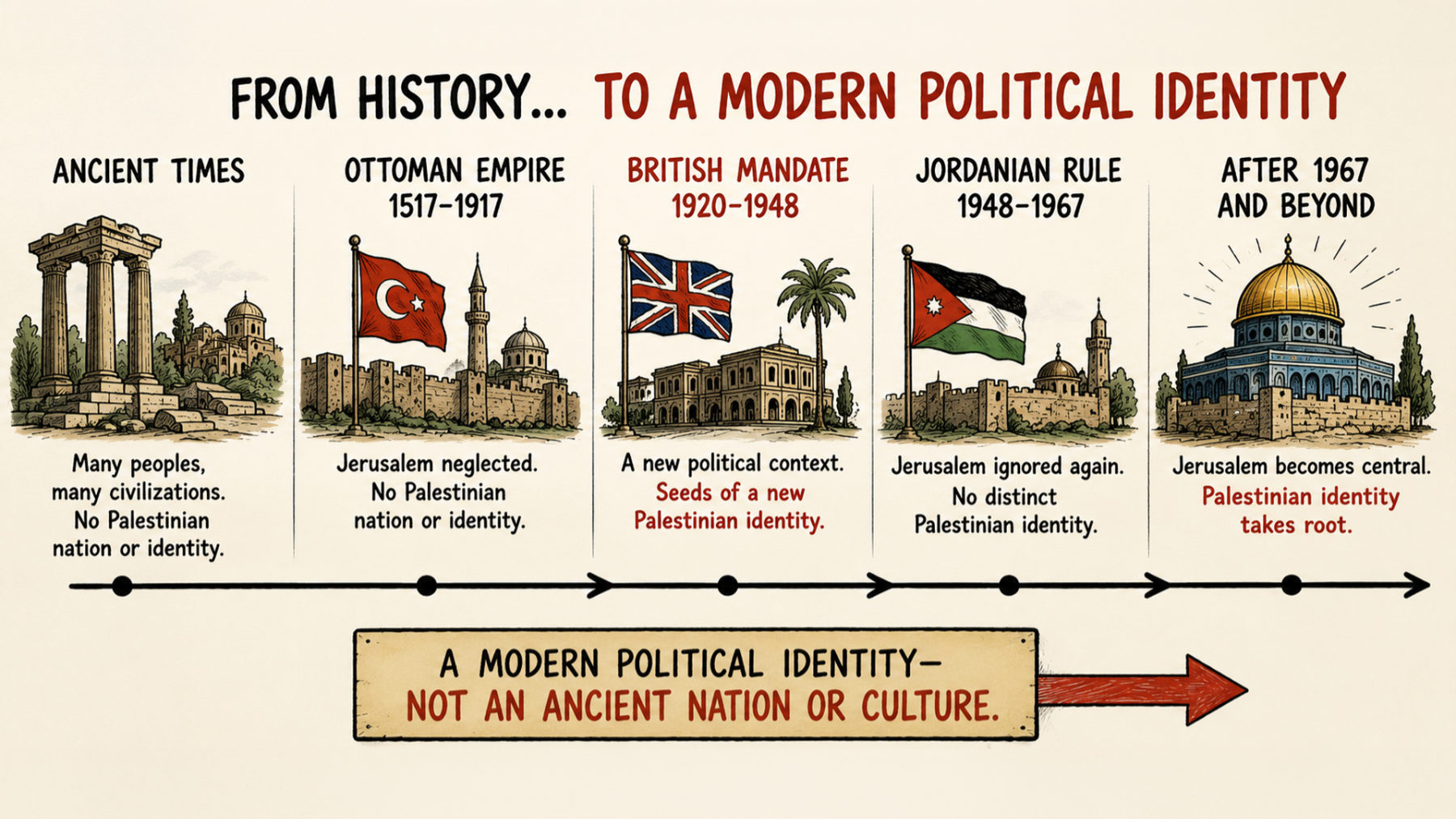 Palestinian Culture, Part 1: Origins
 Radical U – Part 2: How Students Turned their Professors' Words into Deeds
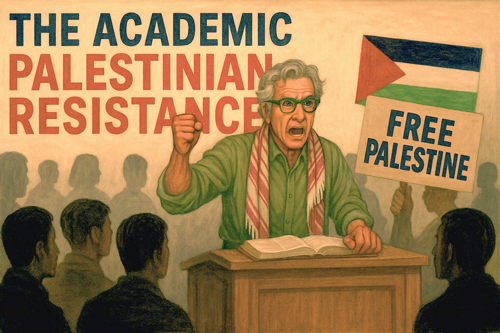 Radical U – Part 1: How Professors Became Architects of the Academic Palestinian Resistance