





Click here to read Part 1: The Betrayal of the Kurds.
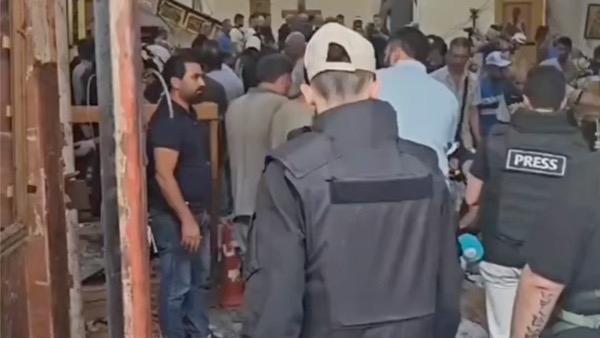
The collapse of Kurdish autonomy did not inaugurate Syria's current phase of violence; it confirmed a pattern already in motion. Long before Kurdish towns were pressured into surrender, Syria's religious minorities were being subjected to a systematic campaign of intimidation, siege, and erasure. Christians, Druze, Yazidis, and Alawites—each distinct in history and identity—have faced the same progression: accusation, coercion, violence, displacement, and silence.
What unites these assaults is not spontaneity, but method. Across communities, violence has been deployed not merely to punish, but to reshape demographics and consolidate control. The objective is not reconciliation. It is submission—achieved incrementally, normalized diplomatically, and obscured narratively.
Christians: The Faith Being Erased at Its Source
Christianity was born on Syrian soil. Antioch was among the earliest centers of the Church; Damascus is inseparable from the conversion of St. Paul. For nearly two millennia, Christian communities survived conquest and upheaval. What they face today is different in kind: not episodic persecution, but elimination by attrition.
Over the past year, Christian life in Syria has been steadily dismantled. Churches have been shelled or vandalized. Clergy have been detained, threatened, or forced into silence. Christian neighborhoods—particularly in mixed areas—have been subjected to raids and intimidation under accusations of "foreign loyalty" or insufficient ideological conformity. These are not legal charges; they are religious indictments.
The suicide bombing of a Christian church in Damascus was not only an act of terror but a declaration: sanctuaries no longer protect. In some areas, worship itself has become dangerous. In the aftermath, attendance collapsed—not because faith diminished, but because survival intervened.
Schools, Silence, and the Quiet Exit
Education has become another front. An increasing number of Christian parents and other minorities report that children are pressured to recite jihadist slogans and conform to religious practices alien to their faith as a condition of acceptance. This is not social friction; it is coercion at the level of identity. When education becomes indoctrination, coexistence has already failed.
No formal decree ordering Christians out has been issued. None is required. Fear, isolation, and abandonment have done the work more efficiently. What remains of Christian Syria survives at the mercy of forces that tolerate Christians only insofar as they are silent or compliant or both.
Druze: Massacre and Besiegement
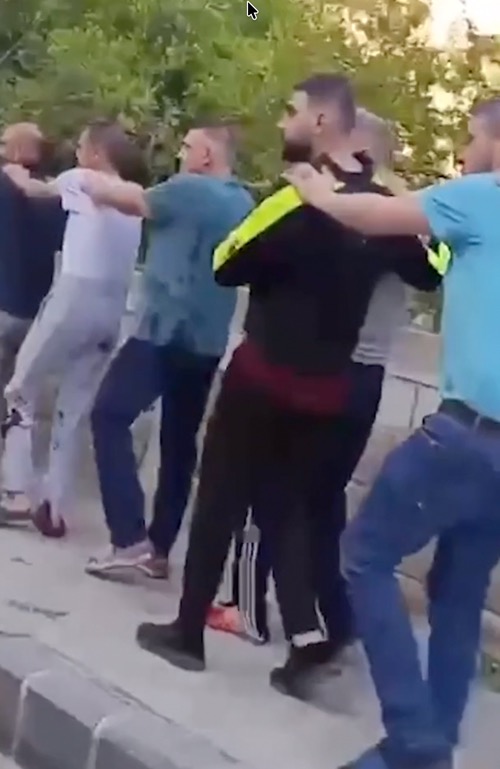
If Christian persecution has been incremental, the assault on the Druze has been openly genocidal. In July 2025, regime forces and allied jihadist militias killed an estimated 3,000 Druze civilians in one of the bloodiest sectarian massacres since the fall of Assad. Homes were torched. Druze-run hospitals were overrun, with doctors and nurses murdered inside.
One atrocity became emblematic: the execution of the Saraya family. Jihadist fighters allied with the regime rounded up the male members of the family, blindfolded and handcuffed them, marched them to Tishreen Square, and executed them with machine-gun fire. The perpetrators filmed the killings themselves—an act of deliberate terror intended to warn the Druze population that lineage itself was now a death sentence. One of the victims of this terrorist massacre was an American Druze named Hossam Saraya from Oklahoma, which triggered an FBI counterterrorism investigation.
If not for Israel, the Druze Would be Subject to Genocide
In an extraordinary interview with Ynetnews, Druze religious leader Sheikh Hikmat al-Hijri, thanked Israel for preventing a much greater slaughter—"Israel saved us from genocide." He told the media outlet, "The only crime for which we were murdered was being Druze...This is an ISIS-style government, established as a direct continuation of al-Qaeda." (The elite media totally ignored this interview.) His words carried unusual gravity: absent outside force, he said, the killing would not have stopped. That admission underscores a devastating reality—Druze survival depended not on the Syrian state, but on external deterrence.
Yet, Ambassador Barrack has become a veritable negotiator for the Syrian regime in demanding that Israel withdraw its insistence on a demilitarized zone from the Golan Heights to Damascus in order to protect the Druze as well as its northern border from terrorist attacks. This is not Israeli "aggression" as Syrian President Sharaa continues to blame Israel for all his problems. Videos of displays of Syria's jihadist soldiers chanting "death to the Jews" along with massive Islamist demonstrations in Syria threatening infidels tell the true story.
Even with Israel trying to protect the Druze, the Syrian regime and its jihadist militias continue to viciously torment them. Some 200 Druze women and children have been held hostage by jihadists for the last four months. Druze areas, particularly Suwayda, have been subjected to sustained siege conditions: electricity cut for as long as 12 to 20 hours a day, major roads systematically closed, and intermittent shelling that keeps civilians in a state of constant fear. Economic life has been strangled. Aid has been obstructed.
Despite repeated promises by President al-Sharaa to conduct investigations into the July massacre, no credible inquiry has occurred. No commanders have been named. No perpetrators arrested. The absence of accountability has functioned as permission—signaling that violence against the Druze carries no cost.
Yazidis: A Genocide Reopened
For Yazidis, the current violence reopens wounds that never healed. Still recovering from ISIS's genocidal campaign, Yazidi communities in Syria have again been displaced. Homes and shrines have been destroyed or desecrated. Families have fled under threat, fearing a repetition of the horrors that defined their recent past.
The most alarming development is the destabilization of camps and detention facilities holding ISIS-linked families. As Kurdish forces were forced to withdraw, security deteriorated. Radicalized networks reasserted themselves. Yazidis—already marked for extermination once—understand the implications.
Alawites: Punished for Ambiguity
Alawite communities, long associated—fairly or not—with the former regime, have not been spared. In coastal regions, Alawite villages accused of insufficient loyalty have faced retaliatory violence, mass arrests, and killings.
The purpose is discipline. Alawites are being taught that neutrality is unacceptable, that ambiguity invites punishment. Entire villages have been emptied. Families have disappeared into detention systems with no transparency and no recourse.
A Unified Pattern of Erasure
Taken together, these assaults reveal a coherent strategy rather than a series of disconnected crises. Each community is targeted differently, but the mechanics are identical.
First comes accusation: disloyalty, foreign alignment, resistance to unity. Then comes pressure: raids, infrastructure cutoffs, road closures, economic strangulation. Violence follows—sometimes spectacular, sometimes incremental. Displacement becomes inevitable.
The fears of Syria's minorities that al-Sharaa's forced centralization of governmental power and the concomitant stripping of local sovereignty will bring even more catastrophes are not exaggerated. A significant portion of Syria's reconstituted military leadership and rank-and-file emerged from networks that were forged under the command of Ahmed al-Sharaa, drawing heavily on fighters previously aligned with Hayat Tahrir al-Sham. That organization developed a record of violent repression in areas it controlled, particularly toward religious and ethnic minorities, while governing through the enforcement of Sharia.
The incorporation of these former combatants into state security structures all but guarantees future massacres, religious coercion, sectarian abuse, and doctrinal enforcement of Islamic law—which has already begun in various areas under government control.
Click here to read Part 3: Diplomatic Treachery and Media Malpractice
 Frank Wolf served 17 terms in the U.S. House of Representatives before retiring in 2015 to focus on advancing human rights and religious freedom. He is the author of the International Religious Freedom Act of 1998 and has held leadership roles including Baylor University's Wilson Chair in Religious Freedom and Commissioner on the U.S. Commission on International Religious Freedom. Wolf lives in Vienna, Virginia with his wife, Carolyn.
 Steven Emerson is executive director of the Investigative Project on Terrorism, which tracks radical Islamist networks in the West. He is the author of eight books and producer of multiple award-winning documentaries, including "Jihad in America: The Grand Deception" which is the only comprehensive exposé of the Muslim Brotherhood's covert infrastructure in the United States.
Copyright © 2026. Investigative Project on Terrorism. All rights reserved.
Articles by the IPT may be re-published as long as full attribution and a link back to the original article is provided. |
 The Jihad Against Syria's Minorities: A Documentary Call to Act
 The Silent Genocide of Syria's Minorities - Part 1: The Betrayal of the Kurds
 Castimatidis Interviews Emerson on Syrian Jihad, Turkish Terrorism and IRGC Defections