





Editor's note:
"The Silent Genocide of Syria's Minorities" is a 3-part series that documents the systematic destruction of Kurdish self-rule in Syria and the coordinated persecution of the country's other religious minorities—Christians, Druze, Yazidis, and Alawites—through siege, massacre, forced displacement, and impunity. This series draws on eyewitness reporting, scores of interviews with representatives of Syrian minorities, unreleased US intelligence reports, hundreds of confirmed videos, and documented atrocities. The series exposes how Western diplomatic silence and media malpractice enabled an unreconstructed Jihadist regime to implement a deliberate strategy of demographic cleansing.
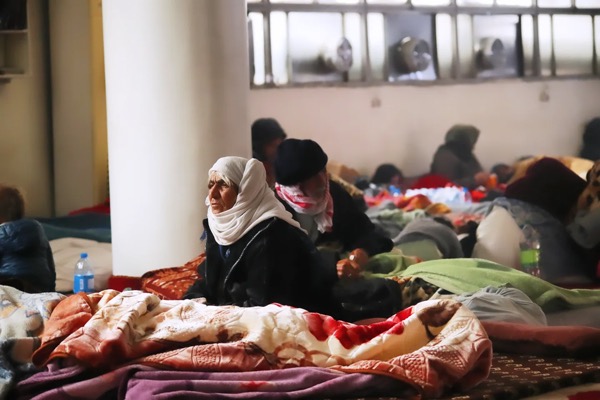
The collapse of Kurdish self-rule in northeastern Syria did not come through diplomacy or reconciliation. It arrived through force—preceded by siege, intimidation, and calculated violence, and followed by a coerced agreement that formalized surrender. In a matter of weeks, a people who had governed themselves for nearly a decade and served as the West's most reliable partner against ISIS were stripped of regional sovereignty and left exposed to a regime and militias that had already demonstrated their intent.
What unfolded over the past month was not a sudden breakdown. It was the final phase of a campaign long in preparation. Syrian government forces, backed by Arab militias and enabled by Turkey, launched a coordinated assault on Kurdish-held territory—targeting infrastructure, civilian morale, and political leverage simultaneously. Electricity was cut. Roads were closed. Artillery and drones followed. When Kurdish defenses finally buckled, the resulting agreement did not protect Kurdish rights or security. It codified defeat.
This was not peace. It was capitulation under fire.
An Alliance Paid in Blood—and Abandoned
For years, the Kurdish-led Syrian Democratic Forces (SDF) formed the backbone of the international campaign against ISIS. They fought street by street, town by town, sustaining catastrophic losses—more than 11,000 dead—while liberating territory and guarding detention facilities holding thousands of ISIS fighters and family members. Their sacrifices spared Western forces from bearing the full human cost of that war.
Yet when the SDF came under direct assault, the alliance collapsed. Kurdish leaders appealed for mediation, ceasefire enforcement, and deterrence. None arrived. Instead, Washington signaled disengagement. Senior U.S. officials began speaking of "integration" even as Kurdish towns were shelled and civilians fled. The message—delivered through silence and omission—was unmistakable: Kurdish utility had "expired," the exact word used by Ambassador Tom Barrack.
That signal mattered. It emboldened Damascus and its allies, removed the last restraint on escalation, and accelerated the assault. The agreement that followed—signed under duress—forced the Kurds to relinquish control over security, borders, and governance, dissolving the autonomy they had built since 2014.
Violence as Political Leverage
The campaign against the Kurds followed a deliberate sequence. First came pressure: economic strangulation, infrastructure sabotage, and psychological warfare. Then came violence—often carried out by allied Arab militias, allowing the regime plausible deniability while achieving the same result. Kurdish neighborhoods in Aleppo, Raqqa, and surrounding areas were assaulted. Civilians fled en masse toward Hasakah and Qamishli, abandoning homes they may never reclaim.
Arab militias aligned with Damascus played a central role. Reports described house-to-house intimidation, arbitrary detentions, and public humiliation intended to degrade Kurdish identity. Kurdish women and children were among those abducted. Entire families disappeared into militia-controlled areas, their whereabouts unknown.
This violence was not random or undisciplined. It was instrumental—designed to empty territory, break resistance, and force political surrender without the burden of prolonged urban warfare.
Turkey's Hand on the Scale
Turkey's role in this collapse was neither peripheral nor passive. Ankara has long viewed Kurdish self-rule in Syria as an existential threat, regardless of the SDF's role in defeating ISIS. Over the past month, Turkish pressure intensified—diplomatic, military, and logistical—aligning seamlessly with Damascus's objectives.
Turkish-backed actions destabilized detention facilities holding ISIS members, further weakening Kurdish leverage. Drones struck near prisons. Chaos followed. Each incident compounded the same message: Kurdish control was temporary, conditional, and dispensable.
The assault that culminated in the surrender of Kurdish sovereignty was not solely Syrian. It was engineered regionally, with Turkey as a dominant architect and beneficiary.
The ISIS Time Bomb
As Kurdish forces were pushed back, the security architecture they maintained began to unravel. ISIS detainees escaped from facilities amid the chaos of handovers and attacks. Al-Hol camp—already a radicalization incubator—slipped further out of control. Each breach carried regional and global consequences.
This outcome was entirely predictable. The SDF's ability to guard thousands of hardened jihadists depended on territorial control and international backing. Once both were withdrawn, collapse was inevitable. Kurdish commanders warned of this repeatedly. Their warnings went unheeded.
The irony is stark: in the name of "stability," policies were pursued that made an ISIS resurgence more likely. The very force that dismantled the caliphate was sidelined, while jihadist networks exploited the vacuum.
The Agreement That Licensed Persecution
The agreement forced upon the Kurds did not include enforceable protections for civilians, cultural rights, or political representation. It transferred authority upward without safeguards downward. In effect, it granted Damascus—and its allied militias—a free hand.
Since the signing, intimidation and displacement have continued. Kurdish communities now live under the shadow of forces that openly question their loyalty and legitimacy. The surrender of sovereignty did not end violence; it normalized it.
This is what makes the agreement so dangerous. It transformed an active assault into sanctioned dominance, stripping the Kurds of the one thing that had protected them: self-governance backed by international partnership.
Diplomatic Silence as a Weapon
Throughout this period, U.S. Ambassador Barrack's public posture reinforced the regime's advantage. His statements minimized Kurdish relevance while praising Damascus's assumed capacity to manage security. He did not publicly condemn attacks on Kurdish civilians. He did not demand accountability for militia abuses. He did not condition engagement on protection.
Silence, in this context, was not neutral. It functioned as endorsement.
A Pattern, Not an Exception
What happened to the Kurds is not unique. It follows the same model applied elsewhere in Syria: isolate a community, question its loyalty, apply force, extract submission, and present the outcome as reconciliation. The Kurds were simply the most recent—and the most strategically consequential—target.
Their betrayal carries consequences far beyond Syria. It signals to partners everywhere that alliances are conditional, sacrifices fungible, and protection temporary.
Click here to read Part 2: A Country Being Emptied
 Frank Wolf served 17 terms in the US House of Representatives before retiring in 2015 to focus on advancing human rights and religious freedom. He is the author of the International Religious Freedom Act of 1998 & has held leadership roles including Baylor University's Wilson Chair in Religious Freedom & Commissioner on the US Commission on International Religious Freedom. Wolf lives in Vienna, Virginia with his wife, Carolyn.
 Steven Emerson is executive director of the Investigative Project on Terrorism, which tracks radical Islamist networks in the West. He is the author of eight books and producer of multiple award-winning documentaries, including "Jihad in America: The Grand Deception" which is the only comprehensive exposé of the Muslim Brotherhood's covert infrastructure in the United States.
Copyright © 2026. Investigative Project on Terrorism. All rights reserved.
Articles by the IPT may be re-published as long as full attribution and a link back to the original article is provided. |
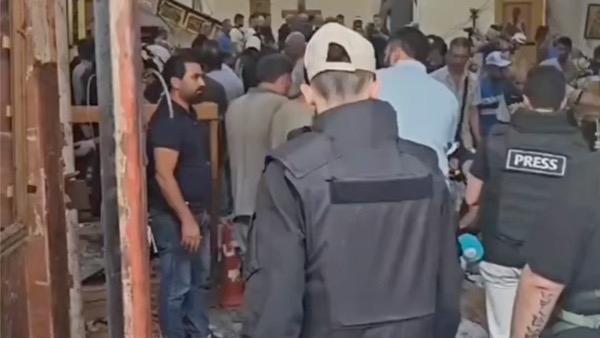 The Silent Genocide of Syria's Minorities - Part 2: A Country Being Emptied
 The Jihad Against Syria's Minorities: A Documentary Call to Act
 Syrian Opposition Leader Offers Non-Islamist Alternative Plan for Syria