





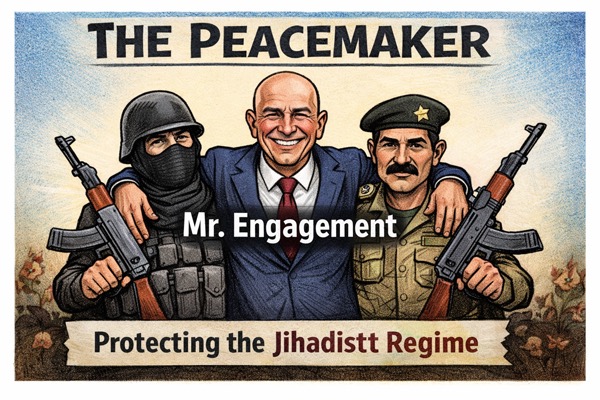
The destruction of Kurdish autonomy and the systematic persecution of Syria's religious minorities did not occur in a vacuum. They unfolded within a permissive international environment shaped by Western diplomacy that substituted engagement for deterrence, access for accountability, and rhetoric for protection. At the center of this failure stands the U.S. diplomatic posture toward Syria's new ruler—and the conduct of Ambassador Tom Barrack, whose public interventions consistently reinforced normalization while atrocities mounted.
Rather than functioning as a restraint on power, Western engagement became a shield for it. The language of "transition," "stability," and "integration" was repeatedly invoked to obscure realities on the ground: sieges, massacres, forced displacement, and the systematic elimination of minority life. In this environment, diplomacy did not moderate violence. It reframed it.
Tom Barrack and the Record of Public Endorsement
Since assuming his role as U.S. envoy, Tom Barrack has not presented himself as a skeptical interlocutor. He has repeatedly urged the international community to "give the new Syria a chance," describing Ahmed al-Sharaa's rise as an evolution "from guerrilla warfare to governance." In public remarks and social-media posts, Barrack emphasized that Damascus was now "positioned to take responsibility" for security across the country, including ISIS detention facilities.
These statements were not neutral observations. They were endorsements issued in the midst of ongoing violence.
At no point did Barrack publicly condemn the July massacre of Druze civilians. He did not denounce the execution of entire families. He did not call out the forced displacement of Kurdish populations. He did not issue a statement after churches were bombed or clergy intimidated. He did not demand independent investigations into any of these crimes.
Instead, Barrack repeatedly framed events through the lens of administrative necessity. The dismantling of Kurdish self-rule was described as "integration." Military advances into minority regions were characterized as "security consolidation." The collapse of detention security was treated as a management problem rather than the foreseeable consequence of dismantling the only force capable of maintaining it.
When Kurdish leaders warned that "integration under fire" amounted to surrender, Barrack dismissed those concerns as premature. When ISIS detainees escaped amid chaos, he spoke of "capacity building" rather than policy failure.
Silence, here, was not neutrality. It was alignment.
From Mediator to Cheerleader
Barrack's posture went beyond omission. At critical moments, he actively echoed regime narratives. He publicly minimized concerns about the ideological composition of Syria's new security forces despite extensive reporting that many units are staffed by former jihadists. He praised Damascus's "willingness to assume responsibility" even as evidence mounted that responsibility was being exercised through sectarian violence.
The most revealing episode came in July, when Israel intervened militarily to halt an ongoing massacre of Druze civilians. Rather than acknowledging that intervention saved lives, Barrack criticized Israel's actions while remaining silent on the violence that precipitated them. In effect, the act of preventing mass murder drew more rebuke than the mass murder itself.
The inversion was unmistakable: restraint was condemned; slaughter was contextualized.
This message was not lost on Damascus. It signaled that rhetorical compliance would be rewarded, that promises of investigations would suffice, and that accountability was not a prerequisite for engagement.
Media Malpractice: Echoing Power, Erasing Victims
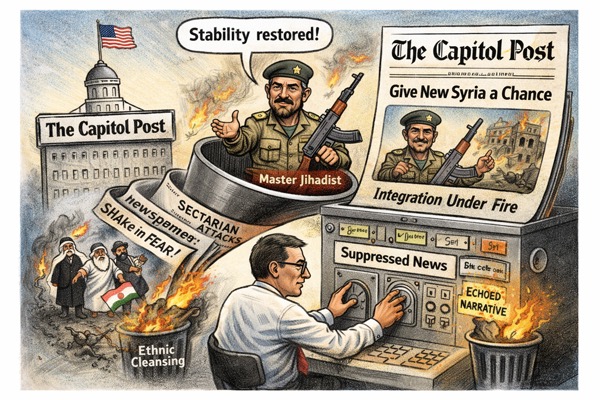
Elite Western media did not merely fail to challenge this posture; they reinforced it. Outlets such as the Associated Press and The Washington Post repeatedly adopted regime framing while omitting or diluting evidence of deliberate violence perpetrated against the various religious minorities.
In coverage of the Druze massacres, reporting frequently described events as "clashes," "unrest" or the meaningless term "sectarian violence"—language that implies symmetry where none existed. Articles referenced "violence between groups" while avoiding clear attribution to regime-aligned jihadist militias, despite extensive video documentation. Victims' religious identities were often removed from headlines, severing violence from its genocidal context.
Reporting on the Kurds followed a similar pattern. The forced withdrawal of Kurdish forces was described as Damascus "reasserting control" or "restoring sovereignty," while the artillery strikes, drone attacks, militia terror, and mass displacement that preceded withdrawal were treated as secondary details. Autonomy did not "expire." It was destroyed. Yet the language of inevitability replaced the language of coercion.
Christian persecution was rendered even more invisible. Church bombings were reported as isolated security incidents. Clergy intimidation was omitted. The steady flight of Christians from their ancestral towns was rarely treated as a coherent phenomenon. The disappearance of Christianity from the land of its birth was reduced to episodic disturbance.
This was not balance. It was systematic minimization.
Misrepresenting Israel's Intervention on Behalf of the Druze
The most egregious distortion concerned Israel's July intervention. Both the Associated Press and the Washington Post framed Israel's actions primarily as escalation or regional aggression, often foregrounding Syrian sovereignty while marginalizing the humanitarian context.
What was omitted is decisive: the most senior Druze religious leader in Syria later gave a public interview stating explicitly that Israel's intervention prevented a far larger massacre and likely genocide. His testimony was not ambiguous. Without intervention, he said, the killing would not have stopped.
That statement—arguably the most authoritative Druze voice available—was ignored or buried. Instead, elite media amplified regime complaints and international handwringing, presenting intervention as the problem rather than the solution.
By excluding Druze testimony while amplifying regime narratives, the media inverted victim and aggressor. Protection was reframed as provocation. Survival was recast as destabilization.
When Journalism Becomes Facilitation
The cumulative effect of this reporting is not merely misrepresentation. It is enablement.
When media repeat regime promises of "investigations" without follow-up, they legitimize delay. When they describe massacres as "clashes," they erase perpetrators. When they omit sectarian identity, they conceal motive. When they frame interventions that stop killing as aggression, they discourage future restraint.
At a certain point, this ceases to be negligence and approaches facilitation. Narrative laundering provides cover. Cover enables impunity. Impunity invites repetition.
This is not an abstract media ethics debate. It has measurable consequences: fewer deterrents, weaker responses, and higher body counts.
The Price of Pretending
Diplomacy without deterrence and journalism without skepticism formed a mutually reinforcing loop. Regime violence was reframed as progress. Silence was mistaken for consent. Consent became impunity.
The result was not peace. It was escalation by other means.
As long as Western officials and elite media continue to reward rhetoric while ignoring outcomes, the incentives remain unchanged. Violence works. Denial suffices. Accountability is optional.
And the dead do not get corrections.
 Frank Wolf served 17 terms in the US House of Representatives before retiring in 2015 to focus on advancing human rights and religious freedom. He is the author of the International Religious Freedom Act of 1998 & has held leadership roles including Baylor University's Wilson Chair in Religious Freedom & Commissioner on the US Commission on International Religious Freedom. Wolf lives in Vienna, Virginia with his wife, Carolyn.
 Steven Emerson is executive director of the Investigative Project on Terrorism, which tracks radical Islamist networks in the West. He is the author of eight books and producer of multiple award-winning documentaries, including "Jihad in America: The Grand Deception" which is the only comprehensive exposé of the Muslim Brotherhood's covert infrastructure in the United States.
Copyright © 2026. Investigative Project on Terrorism. All rights reserved.
Articles by the IPT may be re-published as long as full attribution and a link back to the original article is provided. |
 Twenty Thousand Gone
 The Jihad Against Syria's Minorities: A Documentary Call to Act
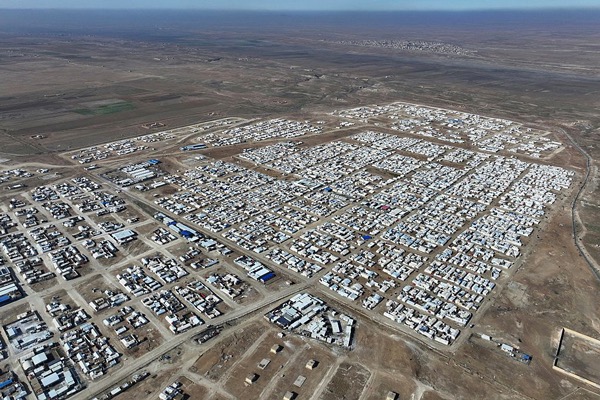
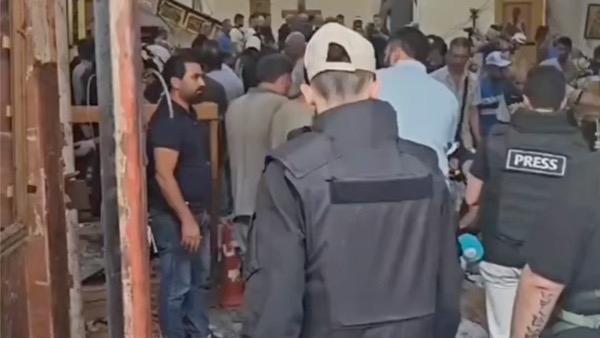 The Silent Genocide of Syria's Minorities - Part 2: A Country Being Emptied